

The Strategic Imperative of Aluminum Prototype Tooling in Design Validation
In the contemporary landscape of product engineering, the transition from a digital CAD model to a tangible, functional asset represents a moment of profound vulnerability. It is here, in the physical realm, that theoretical designs confront the unforgiving laws of thermodynamics, material science, and mechanical tolerance. To navigate this perilous transition, engineering teams have long relied on a singular, versatile workhorse: the aluminum prototype tool. Far from being a mere preparatory step, aluminum tooling constitutes a strategic imperative in the design validation process. By offering an unparalleled synthesis of speed, precision, and economic viability, these tools empower industries to fail safely, iterate rapidly, and ultimately, converge on production-ready designs with demonstrable confidence.
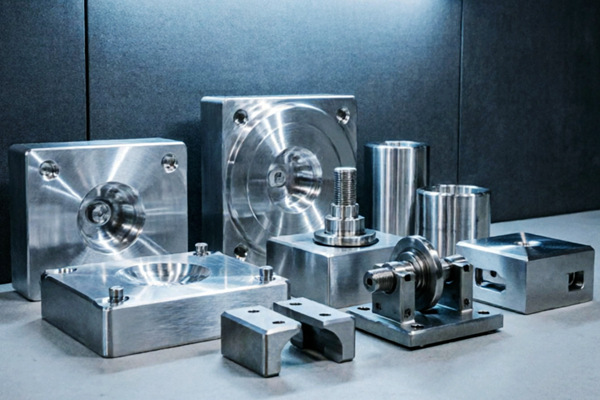
The fundamental value of aluminum in prototyping is rooted in its unique metallurgical properties. Aluminum offers an exceptional strength-to-weight ratio, coupled with remarkable machinability. Unlike steel, which demands extensive machining time and heavy-duty equipment, aluminum can be milled, turned, and EDM-cut with relative speed and precision. This machinability translates directly into lead time reduction, allowing engineering teams to compress what was historically a months-long tooling process into a matter of weeks. Furthermore, the material’s inherent thermal conductivity ensures efficient heat dissipation during processes like injection molding or casting, stabilizing cycle times and yielding parts with consistent dimensional fidelity.
Sector-Wide Versatility and Application
The utility of aluminum prototype tools transcends industry boundaries, proving its versatility in addressing specific engineering challenges.
In theautomotive and aerospace sectors, where safety and aerodynamics are paramount, aluminum tools are used to produce functional prototypes of engine housings, brackets, and interior trim components. These are not merely "look-alike" models; they are "work-alike" units capable of enduring thermal cycling and mechanical stress. Engineers utilize these tools to test assembly fits, evaluate material flow in complex molds, and even conduct preliminary crash simulations. The lightweight nature of the tool itself also allows for easier handling and rapid setup changes on the production floor, which is vital when iterating through multiple design revisions.
Theconsumer electronicsindustry presents a different set of challenges: miniaturization and cosmetic perfection. For smartphones, wearables, and laptops, the external casing is as much about function as it is about brand identity. Aluminum prototype tools are indispensable for creating thin-wall enclosures with tight tolerances. They allow designers to validate anodizing finishes, surface textures, and internal snap-fit features before committing to costly steel production molds. Given the six-month product lifecycle typical of this sector, the speed afforded by aluminum tooling is not just an advantage; it is a prerequisite for survival.
In themedical devicesfield, the stakes are regulatory as well as functional. Prototypes produced via aluminum tooling are essential for ergonomic testing and sterilization compatibility. For devices like surgical handles or diagnostic equipment housings, the ability to test the "feel" and weight distribution in a clinical setting is crucial. Aluminum tools enable the rapid production of small-batch runs for clinical trials, ensuring that the final product meets the rigorous standards of the FDA or CE without the prohibitive cost of hard tooling that may later require modification.
The Critical Role in the Design Verification Phase
While applications are diverse, the overarching significance of aluminum prototype tools converges on one pivotal stage: Design Verification and Validation (V&V). This phase represents the last line of defense against catastrophic production failures and costly recalls.
1. Geometric Validation and Fit:The most immediate function is dimensional accuracy. Even with sophisticated CAD software, "digital twin" models cannot fully account for material shrinkage, warpage, or draft angle anomalies that occur during real-world thermal processing. Aluminum tools allow engineers to extract physical parts that can be subjected to Coordinate Measuring Machine (CMM) inspection. This physical feedback loop identifies discrepancies in wall thickness or mating surfaces that simulation software might overlook, ensuring that "Part A" fits seamlessly into "Part B" when the product goes to high-volume assembly.
2. Material Behavior and Process Optimization:Aluminum tools serve as a predictive platform for material flow. In injection molding, the tool's surface finish and gate design dictate how molten polymer fills the cavity. Running trials with aluminum tooling allows engineers to identify weld lines, short shots, or air traps early in the design cycle. The data gathered here is directly translatable to steel tool design, allowing engineers to optimize injection pressures, temperatures, and cooling channel layouts. This "learning" phase is invaluable; it de-risks the massive capital expenditure associated with production tooling.
3. Functional and Durability Testing:Beyond fit, aluminum-produced parts are robust enough for destructive testing. Manufacturers can conduct tensile tests, drop tests, and environmental stress screening (thermal humidity, salt spray) on components generated from aluminum tools. This provides a realistic estimate of the product's lifespan and failure modes. If a prototype fails during this phase, the cost is a few thousand dollars for a tool modification—a stark contrast to the hundreds of thousands of dollars required to modify a hardened steel production mold.
The Economics of Risk Mitigation
Ultimately, the adoption of aluminum prototype tools is a financial calculus. The cost of a single production tool error can extend to scrapped inventory, delayed product launches, and damage to brand reputation. Aluminum tooling provides a "low-cost, high-feedback" environment. It encourages aggressive iteration, allowing design teams to "fail fast and recover quickly." By the time a design moves to the steel tool stage, it has been physically verified, process-optimized, and stress-tested.
In conclusion, aluminum prototype tools are much more than temporary fixtures; they are strategic assets in the product development lifecycle. By offering a perfect blend of speed, precision, and cost-efficiency, they bridge the gap between digital dreams and physical reality. Across automotive, aerospace, medical, and consumer markets, the humble aluminum tool ensures that when a product finally reaches the consumer, it does so not with the uncertainty of the unknown, but with the confidence of rigorous, real-world verification.


