

Stainless Steel CNC Machining in Modern Prototyping and Industrial Application
In the contemporary manufacturing ecosystem, the ability to translate a digital blueprint into a physical, functional component with absolute precision is the cornerstone of innovation. At the heart of this capability lies Computer Numerical Control (CNC) machining, a subtractive manufacturing process that has been revolutionized by the integration of advanced software and automation. While CNC technology is compatible with a vast array of materials, stainless steel remains the premier choice for industries where durability, corrosion resistance, and structural integrity are non-negotiable. Stainless steel CNC machining services have thus evolved beyond simple part production; they are now a critical enabler of research, development, and large-scale industrial operations.
The Metallurgical Advantage of Stainless Steel
The ubiquity of stainless steel in CNC machining is not incidental but is rooted in its exceptional metallurgical properties. The alloy’s primary constituent, chromium, forms a passive oxide layer on the surface that is self-healing and provides remarkable resistance to oxidation and corrosion. This makes it indispensable for environments that are chemically aggressive or exposed to extreme moisture.
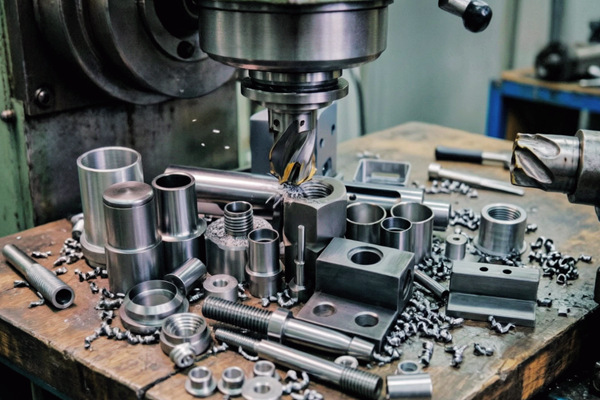
Furthermore, the material offers a superior strength-to-weight ratio and can withstand significant thermal and mechanical stress without deforming. Variants such as 304, 316, and 17-4 PH are particularly favored in machining; while 304 offers excellent formability and general corrosion resistance, 316 adds molybdenum for enhanced protection against chlorides, and 17-4 PH allows for post-machining heat treatment to achieve exceptionally high tensile strength. However, these very qualities present a machining paradox: stainless steel is notoriously difficult to cut. It work-hardens rapidly, generates high cutting temperatures, and is abrasive on tooling. Consequently, professional stainless steel CNC machining services require high-rigidity machinery, carbide or ceramic cutting tools, and sophisticated cooling strategies to manage thermal deformation and ensure tight tolerances.
Cross-Industry Applications: The Backbone of Critical Systems
The application of machined stainless steel components spans virtually every major industrial sector. Inaerospace and defense, the material is used for hydraulic fittings, landing gear components, and engine mounts where failure is not an option. The stringent safety regulations in this field necessitate the near-zero defect rates that high-quality CNC machining can provide.
In themedical sector, the biocompatibility of specific stainless steel grades makes them ideal for surgical instruments, orthopedic implants, and dental tools. The machining process here requires immaculate surface finishes and precise geometries to ensure that instruments are not only sterile but also ergonomic and effective in delicate procedures.
Theenergy sector, including oil, gas, and renewable power, relies heavily on large-scale stainless steel components for valves, pumps, and subsea connectors. These parts must endure high-pressure differentials and the corrosive effects of seawater or chemical refining processes for decades. Similarly, in theautomotive and motorsport industries, stainless steel is used for exhaust systems, turbocharger housings, and high-performance drivetrain components, where thermal management and fatigue resistance are paramount.
The Crucial Role in Prototyping and Product Validation
While production-scale machining is essential, the most strategically vital application of stainless steel CNC services often occurs during the product development phase: prototyping. The "proof of concept" is no longer sufficient in a data-driven market; engineers demand functional validation. Stainless steel prototyping serves this exact purpose.
Unlike additive manufacturing (3D printing) which often uses polymers or metal powders with anisotropic properties, CNC machining from a solid billet of stainless steel produces a prototype that possesses the exact metallurgical characteristics of the final production part. This is critical for rigorous testing. For example, when designing a flow control valve for a chemical plant, a plastic prototype might indicate that the geometry is correct, but it will fail to simulate the thermal expansion or fluid dynamics of a steel component. Only a machined stainless steel prototype can undergo destructive testing, fatigue analysis, and pressure cycling to provide empirical data that validates finite element analysis (FEA) simulations.
Furthermore, the prototyping phase is a proving ground for manufacturability. CNC machining allows engineers to identify potential "hot spots" where tool access might be restricted or where residual stresses could cause warping. By iterating the design through multiple CNC prototypes, companies de-risk the production launch. This iterative process reduces the "time-to-market" by ensuring that the transition from prototyping to mass production is seamless, requiring minimal changes to tooling or design.
The Future of Precision Manufacturing
As industry moves toward Industry 4.0, stainless steel CNC machining services are becoming increasingly intelligent. The integration of in-process inspection probes allows for real-time quality control, adjusting tool paths to compensate for minute variations in material hardness. Additionally, sustainability is becoming a focus; advanced chip management and coolant recycling systems are minimizing waste, while the use of high-efficiency machining strategies reduces energy consumption per part.
In conclusion, stainless steel CNC machining services are far more than a manufacturing sub-contractor's offering. They are the bridge between the abstract world of digital engineering and the tangible reality of mechanical physics. Whether it is a single, high-stakes prototype destined for a test bench in a research lab or a million-piece order for an automotive supply chain, the precision and reliability of CNC machining ensure that stainless steel continues to be the material of choice for the world's most demanding applications. As technology continues to evolve, the symbiosis between advanced CNC capabilities and stainless steel alloys will undoubtedly drive the next generation of industrial innovation.


