

Low Volume Metal Parts: Unlocking Flexibility and Precision in Custom Manufacturing
In the rapidly evolving world of manufacturing, the demand for customized, high-quality metal components has never been greater. Industries ranging from aerospace and medical devices to automotive and robotics require parts that meet exacting specifications, often in limited quantities. This is where low volume metal parts manufacturing emerges as a critical enabler of innovation, bridging the gap between prototyping and full-scale production.
Low volume metal parts refer to metal components produced in small batches—typically ranging from a single unit to several thousand pieces. Unlike mass production, which prioritizes economies of scale, low volume manufacturing emphasizes flexibility, speed, and precision. It serves customers who need custom-designed parts without the prohibitive tooling costs and long lead times associated with high-volume production runs.
Why Low Volume Metal Parts Matter
The rise of low volume metal parts is driven by several converging trends. First, product lifecycles are shrinking. Companies across sectors are under pressure to bring new products to market faster, which means they cannot afford to wait months for hard tooling. Second, customization is becoming a competitive necessity. Whether it's a specialized bracket for a drone or a bespoke implant for a surgical procedure, end-users increasingly expect solutions tailored to their unique needs. Third, supply chain resilience has become a top priority. Rather than relying on a single overseas supplier for large inventories, many firms now prefer localized, on-demand production of low volume metal parts to reduce risk and waste.
Manufacturing Processes Suited for Low Volume Production
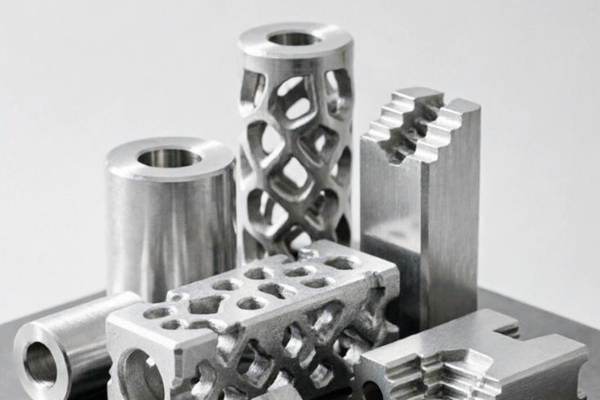
Several advanced manufacturing techniques have emerged as ideal for low volume metal parts. CNC machining remains the workhorse of the industry. It offers exceptional dimensional accuracy and surface finish, and it can handle a wide range of metals, including aluminum, stainless steel, titanium, and brass. For low volume runs, CNC machining eliminates the need for expensive molds or dies, making it cost-effective for quantities as low as one.
Sheet metal fabrication—including laser cutting, plasma cutting, and bending—is another cornerstone. It is particularly well-suited for enclosures, brackets, and chassis components. Waterjet cutting complements these methods by handling thick or heat-sensitive materials without creating heat-affected zones.
For more complex geometries, metal 3D printing (also known as additive manufacturing) has become a game-changer. Technologies like Direct Metal Laser Sintering (DMLS) and Electron Beam Melting (EBM) allow for the production of intricate, lightweight parts that would be impossible or prohibitively expensive to machine conventionally. While additive manufacturing has historically been limited to prototyping, advances in materials and post-processing have made it viable for functional low volume metal parts.
Casting and forging also play a role, particularly when specific material properties are required. Investment casting, for example, can produce detailed metal parts with excellent surface finish, while sand casting remains a cost-effective option for larger, less intricate components. For low volumes, however, these processes often require pattern-making, which can add to lead time and cost.
Key Considerations for Custom Low Volume Manufacturing
When sourcing low volume metal parts, engineers and procurement teams must weigh several factors. Material selection is paramount: the chosen metal must withstand operational stresses, corrosion, temperature extremes, and fatigue. Design for manufacturability (DFM) is equally important. A part that is easy to machine or print in small quantities may be difficult or impossible to produce in large volumes, and vice versa. Early collaboration with a manufacturing partner can identify potential issues and optimize the design for the intended process.
Tolerance requirements also drive process selection. Tight tolerances—often measured in microns—may necessitate CNC machining or precision grinding, while looser tolerances can be met with casting or additive methods. Surface finish, heat treatment, and post-processing operations such as anodizing, plating, or polishing must also be specified.
Cost is another critical dimension. While the per-unit cost of low volume metal parts is inevitably higher than that of mass-produced equivalents, the total cost of ownership can be lower when factoring in reduced inventory, eliminated tooling investments, and faster time-to-market. Transparency in quoting—breaking down material, machining, finishing, and inspection costs—helps buyers make informed decisions.
The Role of Digital Manufacturing Platforms
The digital revolution has transformed how low volume metal parts are sourced. Online manufacturing platforms now allow engineers to upload CAD files, receive instant quotes, and place orders with a few clicks. These platforms aggregate capacity from a network of vetted suppliers, offering access to diverse processes and materials without the overhead of managing multiple vendors. They also provide design feedback, real-time production tracking, and quality documentation, streamlining the entire procurement cycle.
Conclusion
Low volume metal parts are no longer a niche curiosity; they are a strategic asset for manufacturers navigating an era of customization, speed, and uncertainty. By leveraging CNC machining, sheet metal fabrication, additive manufacturing, and other flexible processes, companies can obtain high-quality custom components in the quantities they need, when they need them. As digital platforms continue to mature and materials science advances, the capabilities and accessibility of low volume metal parts manufacturing will only expand—empowering innovators to turn bold ideas into tangible, reliable products.


