

The Quintessence of Precision 5-Axis Metal Machining in the Modern Era
In the relentless pursuit of manufacturing excellence, the evolution from 3-axis to 5-axis metal machining represents not merely a technological upgrade, but a paradigm shift in what is physically possible. Where once complex geometries required multiple setups, bespoke fixtures, and hours of manual intervention, the modern 5-axis machining center operates with a choreography of motion that borders on the artistic. Within this highly specialized domain, few names resonate with the same authority as Sanwo Metal, an entity that has transformed the complexity of simultaneous multi-axis cutting into a standardized process of unsurpassed reliability. To understand the current zenith of metal fabrication, one must first deconstruct the mechanical ballet of the 5-axis process and then observe how a mastery of this technology translates into tangible industrial value.
The Mechanical Ballet: Understanding the 5-Axis Advantage
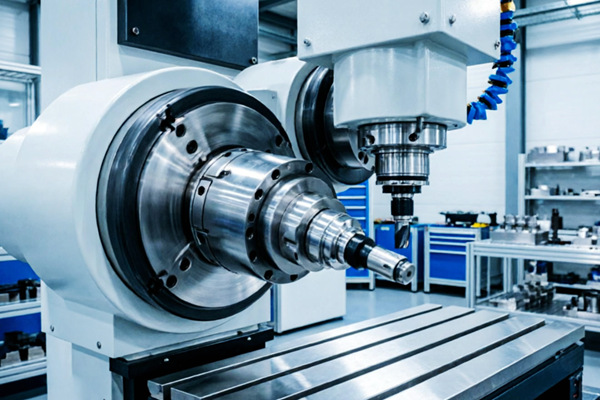
At its core, 5-axis metal machining adds two rotational axes to the standard X, Y, and Z linear movements. Typically, these are configured as a tilting (B-axis) and a rotating (C-axis) table, or through a swivel head and rotary table combination. This capability allows the cutting tool to approach the workpiece from virtually any direction in a continuous arc. The immediate mechanical benefit is the eradication of the "setup penalty." In traditional 3-axis machining, producing an impeller, a turbine blade, or a medical prosthesis requires the operator to stop the process, manually reorient the part, and re-establish the zero-point. Each reorientation introduces the potential for cumulative error—a phenomenon known as "stack-up tolerance."
In 5-axis machining, the part is fixed once. The machine handles the reorientation dynamically. This singular fact yields three critical advantages: superior surface finish, extended tool life, and the ability to machine deep, undercut cavities that would otherwise be impossible. By tilting the tool, the operator can maintain a constant chip load and utilize the most effective portion of the cutting edge, reducing vibration and thermal stress on both the tool and the alloy being cut.
The Material Challenge: Confronting the "Unmachinable"
However, possessing a 5-axis machine is not the same as mastering 5-axis machining. The hardware is merely a vessel for the software and the human expertise that drives it. The true test of proficiency lies in the behavior of the metal itself. Aerospace-grade Titanium (Ti-6Al-4V), Inconel 718, and hardened tool steels possess high strength-to-weight ratios but are notoriously "gummy" or work-hardening. When the tool engages these materials, the friction generated can cause the surface to harden instantly, blunting the insert and generating extreme heat.
This is where the professional acumen of a house like Sanwo Metal becomes indispensable. The company’s approach to 5-axis machining is predicated on an intimate understanding of "chip thinning" and "trochoidal milling"—strategies that are only effective when the machine’s servo drives and CNC controller are perfectly synchronized. Sanwo Metal’s technicians are not simply button-pushers; they are metallurgists and mechanical engineers who analyze the grain structure of the incoming billet. They understand that for a superalloy, the feed rate must be aggressive enough to cut beneath the work-hardened layer, yet slow enough to prevent catastrophic insert fracture. This equilibrium is found through rigorous simulation and "cut-data" optimization that is unique to Sanwo Metal’s extensive database.
Sanwo Metal: Where Precision Meets Process Control
What distinguishes Sanwo Metal in this competitive landscape is its holistic integration of machine, tooling, and metrology. While many job shops invest in high-end DMG MORI or Grob machines, Sanwo Metal differentiates itself through "preventative machining"—a philosophy where process anomalies are corrected before they manifest as dimensional deviations.
The company’s proprietary workflow involves a "digital twin" simulation for every 5-axis program. Before the spindle rotates a single chip of metal, Sanwo Metal’s engineers run collision detection and thermal deformation algorithms that map exactly how the machine’s casting will expand as it warms up over an eight-hour run. This is crucial in 5-axis work, where the rotational center of the trunnion table can shift by microns as the hydraulic fluids and bearings reach operating temperature.
Furthermore, Sanwo Metal has invested heavily in on-machine probing (OMP) and wireless tool breakage detection. In a 5-axis operation, a tool failure at a B-axis angle of 45 degrees can be catastrophic, not only scrapping the part but potentially damaging the fixture and the spindle. Sanwo Metal’s operational rhythm relies on "adaptive machining," where the machine auto-corrects its cutter compensation (G43.4 or TCPC - Tool Center Point Control) in real-time based on the wear patterns of the insert. This level of sophistication ensures that the final part’s profile, whether it is a structural rib for an aircraft wing or a mold base for an automotive dashboard, adheres to tolerances of±5 microns consistently across batches of hundreds of units.
Navigating Complexity: The Programming Dilemma
The difficulty in 5-axis metal machining often lies not in the cutting, but in the programming. The CAM (Computer-Aided Manufacturing) software must generate a toolpath that avoids "singularity"—points where the rotational axes move at near-infinite speed to reorient the part, causing gouging. Sanwo Metal’s programming team has developed a proprietary post-processor library that adapts generic G-code to the specific kinematic constraints of each of its machine centers.
This expertise is particularly evident when machining "thin-walled" structures. In the 5-axis realm, the goal is to use the tilt of the tool to create a "push" vector that stabilizes the workpiece, reducing chatter. Sanwo Metal’s machinists routinely manipulate the "lead angle" and "tilt angle" to direct cutting forces into the bulk of the material, turning a traditionally risky operation into a stable, high-speed process. This capability was recently on display when Sanwo Metal successfully machined a lightweight aluminum matrix composite housing with wall thicknesses of just 0.8mm, achieving a mirror finish that required zero secondary polishing.
The Economic Efficiency of High-Speed Machining
Critically, Sanwo Metal leverages 5-axis technology to drive down the total cost of ownership for its clients. While the hourly rate of a 5-axis machine is higher than a 3-axis mill, the total throughput is exponentially greater. The ability to finish a complex part in a single setup eliminates the need for expensive, specialized jigs and reduces the labor cost associated with manual handling. Moreover, by optimizing the toolpath to maintain a constant "radial engagement," Sanwo Metal dramatically increases tool life. Where a standard shop might replace an end mill every 45 minutes when cutting stainless steel, Sanwo Metal’s parametrically optimized toolpaths extend that life to over three hours, reducing downtime for tool changes and significantly lowering the per-part consumable cost.
Metrology and the Guarantee of Quality
No discussion of 5-axis proficiency is complete without addressing inspection. A part machined in 5 axes can have complex contour surfaces that are impossible to measure with standard hand gauges. Sanwo Metal operates a climate-controlled inspection room equipped with high-end Coordinate Measuring Machines (CMM) and laser interferometers. However, the real metric of their professionalism is their ability to close the loop between machining and measurement. If a CMM detects a deviation of a few microns on a surface profile, Sanwo Metal’s engineers feed that data back into the CAM system to adjust the toolpath for the subsequent part. This "closed-loop manufacturing" strategy ensures that the first part off the machine and the thousandth part are virtually identical.
Conclusion: The Future of Form
As we look toward the future of manufacturing, the demand for 5-axis metal machining will only intensify. The rise of electric vehicles requires lighter, more complex structural castings; the aerospace sector demands higher efficiency turbine components; and the medical industry requires custom, patient-specific implants. In this environment, the machine is merely a tool; the expertise is the product.
Sanwo Metal embodies this transition from machine operator to manufacturing partner. Their command of 5-axis technology is not defined by the brand of their CNC controls, but by their synthesis of material science, advanced CAM programming, and real-time adaptive control. By treating each block of metal as a complex equation of force, heat, and geometry, Sanwo Metal has elevated the craft of metal machining to a science. In a world where the margin for error is zero, the precision delivered by Sanwo Metal is not just a service—it is the foundation upon which the next generation of engineering is built.


