

How Low-Volume CNC Milling Validates Design Across Industries
Introduction: The Prototyping Paradox
In the modern manufacturing ecosystem, the journey from a digital concept to a physical, functional metal part is fraught with financial and logistical peril. For decades, the economic model of machining dictated that high-volume production was the only path to profitability. The fixed costs of setup, tooling, and programming were so prohibitive that producing fewer than 100 units was often considered a loss-leader. However, the landscape has shifted dramatically with the refinement of Low-Volume CNC Milling. This process has evolved from a necessary evil into a strategic advantage, specifically serving as the critical bridge between theoretical design and market reality. This article explores the multifaceted applicability of low-volume CNC milling, focusing on its indispensable role in design validation across the diverse landscapes of aerospace, medical, automotive, and consumer electronics.
Section 1: The Anatomy of Low-Volume Milling (Defining the Scope)
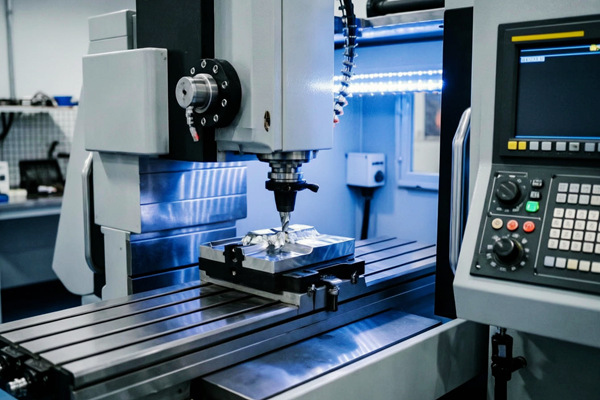
Before delving into its applications, it is essential to define what constitutes "low-volume" in the context of CNC milling. Typically, this refers to production runs ranging from a single prototype to 1,000 units. Unlike high-volume production, which relies on hard tooling, casting, or injection molding, low-volume milling leverages the inherent flexibility of 3-axis to 5-axis machining centers. The process utilizes solid metal blocks—or "blanks"—and removes material using rotating cutting tools.
The primary advantage is the high "geometric complexity" ceiling. Where casting requires draft angles and injection molding requires uniform wall thickness, CNC milling is largely indifferent to geometry. It can produce undercuts, deep cavities, and thin walls with equal proficiency. For design validation, this means that the "as-machined" part is a nearly perfect digital twin of the "as-designed" CAD file, offering a fidelity that additive manufacturing (3D printing) often cannot match in terms of material density and surface finish.
Section 2: The Aerospace Imperative–Weight, Strength, and Certification
The aerospace industry is the ultimate proving ground for low-volume CNC milling. Given the astronomical costs of failure and the stringent regulations of bodies like the FAA and EASA, design validation is not a formality; it is a legal necessity. In this sector, low-volume milling serves two primary functions: prototyping and niche production.
For R&D departments, the ability to mill a complex titanium or Inconel bracket in a week rather than a month allows engineers to test physical responses to stress, vibration, and thermal expansion that simulation software cannot fully predict. The validation process here is "destructive"—parts are pulled, twisted, and heated until they break. Low-volume milling makes this destructive testing economically viable.
Furthermore, the "low volume" aspect is intrinsic to aerospace itself. Many military and private aviation fleets consist of limited numbers of airframes. Producing 100 specialized actuator housings for a specific jet engine variant does not warrant the expense of forging dies. Here, low-volume CNC milling is the primary production method, not just prototyping. The validation ensures that the material microstructure—the grain flow of the metal—is not compromised, which is a risk in casting but a non-issue in milling from billet stock.
Section 3: The Medical Frontier–Biocompatibility and Customization
Moving from the sky to the human body, the medical device sector presents a unique set of validation challenges. Implants, surgical instruments, and orthopaedic hardware must be biocompatible, sterile, and geometrically precise to the micron. The "low volume" trend here is driven by patient-specific customization.
Consider the production of titanium spinal fusion cages or cranial plates. While some are standardized, many are now designed using CT scan data to fit a specific patient's anatomy. This guarantees a production run of one—the ultimate low volume. In this context, CNC milling is not merely "useful"; it is irreplaceable. The validation process for a single custom implant involves rigorous surface finish analysis; if a tool marks the surface improperly, it creates a site for bacterial adhesion. Low-volume milling allows manufacturers to validate "feed rates" and "speeds" on test blocks before committing the expensive medical-grade alloy to the final product.
Additionally, the shift toward "same-day surgery" in dental and orthopaedic fields relies on in-house or local milling centers. The speed of CNC milling allows surgeons to validate the fit of a prosthetic intraoperatively. If the digital model fails to seat properly, a new one can be milled in hours rather than weeks, a luxury that subtractive manufacturing provides over the weeks-long lead time of external casting.
Section 4: Automotive Innovation–The Performance Parts Ecosystem
The automotive industry, traditionally the bastion of mass production, has seen a significant pivot toward low-volume CNC milling due to the rise of electric vehicles (EVs) and performance aftermarket parts. In motorsports, Formula 1 and NASCAR teams do not have the luxury of time; they need parts for next week's race.
Low-volume milling validates designs for "structural optimization" that are impossible with stamped sheet metal. For example, the suspension uprights in a supercar are machined from aluminum billet. While a cast part might be cheaper, it is often heavier and contains porosity. For a performance prototype, milling allows engineers to test the stiffness-to-weight ratio iteratively. They can reduce material in non-critical areas based on FEA (Finite Element Analysis) and then mill a new version to test if the reduction causes flex.
In the context of EV battery enclosures, low-volume milling is used to create "thermal management" prototypes. Engineers mill channels for liquid cooling directly into the baseplate of the enclosure. The validation requires pressure testing to ensure there is no leakage—a test that must be passed before committing to expensive die-casting molds. Consequently, low-volume CNC milling acts as an insurance policy, preventing the disastrous scenario of a flawed mass-production mold that costs hundreds of thousands of dollars to correct.
Section 5: Consumer Electronics–The Aesthetics of Precision
Consumer electronics may seem like a realm reserved for injection-molded plastics and stamped metals, but the high-end sector (smartwatches, premium laptops, and AR/VR headsets) relies heavily on low-volume CNC milling. Here, the design validation is less about mechanical stress and more about "aesthetic consistency" and "haptic feel."
The unibody chassis of many flagship devices is milled from a single block of aluminum. The design process involves "looks-like, works-like" prototypes. Low-volume milling allows industrial designers to hold the physical object, feel its weight, and examine the radius of the edges. The validation process involves anodizing test samples. Because the milling process affects the surface micro-profile, the subsequent anodizing layer may appear differently under different lighting conditions.
Furthermore, "low volume" allows for "market validation." A consumer electronics company may produce 200 units of a new wearable device to test with beta users. These units must be indistinguishable from the final product. CNC milling provides the "surface roughness" (Ra) values necessary to ensure that the device feels smooth and premium. This tactile validation is often the deciding factor in a consumer's purchasing decision, making the precision of low-volume milling a critical component of product success.
Section 6: The Material Science Connection–Validating Machinability
Beyond geometry, a crucial aspect of validation is "machinability." Different alloys behave differently under the cutting tool. For instance, Aluminum 6061 is forgiving, while Aluminum 7075 is harder and more brittle. Stainless steel 316L (medical grade) tends to work-harden, meaning it gets harder as you cut it, which can ruin tools if speeds are not validated.
Low-volume CNC milling provides the "test bed" for process parameter validation. Engineers use the initial runs to monitor "tool wear" and "chip formation." If the chips are stringy and not breaking, it indicates poor chip evacuation, which could lead to tool breakage during a larger production run. By validating the machining strategy on a low-volume batch, manufacturers create a robust "Standard Operating Procedure" that ensures repeatability once the product goes to higher-volume production, provided that the demand eventually scales.
Section 7: Cost-Benefit Re-evaluation
Critics often argue that low-volume CNC milling is expensive on a per-part basis compared to casting. However, when "total cost of ownership" is applied, the economics shift. The cost of failure in design validation is high. If a company rushes to tooling and the design fails at the system integration level, the cost of scrapping tools and relaunching is catastrophic.
Low-volume milling absorbs the "R&D tax" upfront. The cost of the milled parts (perhaps $500 each for a complex bracket) is negligible compared to the $50,000 cost of a mold that doesn't work. Therefore, the applicability of this process is directly linked to "risk mitigation." It offers companies the ability to validate "Design for Manufacturability" (DFM) and "Design for Assembly" (DFA) in a low-stakes environment.
Conclusion: The Future of Manufacturing Flexibility
As we look toward the future of Industry 4.0, the role of low-volume CNC milling is set to expand. The integration of IoT sensors into milling machines allows for real-time monitoring of vibration and temperature, making the validation process more data-rich than ever before. The "digital twin"—the virtual representation of the physical part—can now be updated in real-time based on the feedback from the cutting process.
The applicability of low-volume CNC milling across aerospace, medical, automotive, and consumer electronics underscores a fundamental truth: the hardware is only as good as the validation it undergoes. In a world demanding higher performance, lighter materials, and faster innovation cycles, the ability to iterate quickly and accurately on metal parts is not just a manufacturing function; it is a strategic imperative. Low-volume CNC milling has transcended its role as a mere production tool; it is now the primary architect of engineering confidence, ensuring that when a part goes into the field—whether in the air, in a patient, or on the road—its design has been proven, tested, and validated to the highest standard of precision.


