

Precision in Practice: The Art and Science of Custom Sheet Metal Parts Fabrication
In the modern industrial landscape, few processes are as ubiquitous yet as misunderstood as custom sheet metal parts fabrication. It is the quiet engine behind countless sectors—from aerospace and automotive to medical devices and consumer electronics. Yet, to the untrained eye, sheet metal work may appear deceptively simple: cut a flat sheet, bend it, and weld the seams. In reality, the journey from a flat coil of steel or aluminum to a high-tolerance, structurally sound component is a symphony of physics, metallurgy, and precision engineering. At the heart of this demanding discipline stands Sanwo Metal, a facility that has not merely adopted modern fabrication techniques but has redefined what it means to execute them with mastery.
The foundation of any successful custom fabrication project lies not in the machinery, but in the initial digital architecture. Before a single laser fires or a punch descends, the engineering team at Sanwo Metal engages in what they term "design for manufacturability" (DFM). This is not a cursory review; it is a meticulous dissection of the client's 3D model. Factors often overlooked by design engineers—such as grain direction, spring-back in high-tensile steels, and the minimum bend radius relative to material thickness—are scrutinized. Sanwo Metal’s specialists utilize advanced CAD/CAM software to unfold complex geometries, simulating the stress distribution of each bend. This pre-emptive problem-solving ensures that when the metal is placed on the bed of a CNC turret punch press or a fiber laser cutter, the machine is operating from a toolpath that guarantees dimensional integrity.
Moving from the virtual to the physical, the cutting stage is where raw potential is transformed into tangible blanks. Sanwo Metal differentiates itself through its strategic investment in hybrid cutting systems. Rather than relying solely on traditional CO2 lasers, their facility utilizes high-powered fiber optic lasers that offer superior absorption rates on reflective materials like copper and brass. This technical nuance is critical; a standard laser might scatter or reflect, causing surface imperfections or, worse, damage to the optics. The operators at Sanwo Metal, however, are not simply button-pushers. They are metallurgical technicians who adjust focal length, gas pressure (using nitrogen for a clean, oxide-free edge on stainless steel, or oxygen for faster cutting on mild steel), and cutting speed in real-time. They read the "kerf"—the width of the cut—and compensate for thermal expansion, ensuring that a 2mm tolerance is not an aspiration but a baseline.
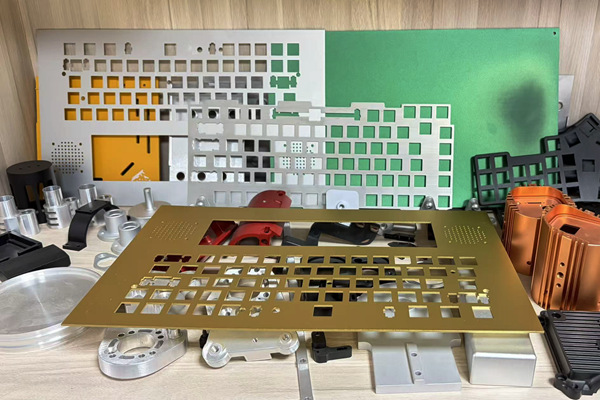
However, the true test of a fabricator's mettle occurs at the press brake. Bending is a chaotic event; the material is stressed beyond its yield point, and without expert intervention, it will either crack or spring back to its original form. Sanwo Metal has conquered this challenge through a combination of state-of-the-art hydraulic press brakes with CNC backgauges and, more importantly, an institutional knowledge of material behavior. Their technicians utilize "air bending" techniques with precision-ground tooling, calculating the exact punch penetration depth required to achieve a 90-degree angle after spring-back. For complex parts requiring multiple bends, they employ "sequential forming" and "hemming" operations that prevent distortion. The floor at Sanwo Metal is a testament to this expertise: operators frequently use angle gauges and coordinate measuring machines (CMM) to verify each part’s geometry, adjusting the machine's crowning system to compensate for deflection along the bed. This is not brute force; it is controlled deformation executed with surgical precision.
Joining techniques at Sanwo Metal further underscore their comprehensive capability. While many fabricators rely heavily on MIG welding, Sanwo Metal employs a hybrid approach that includes TIG welding for cosmetic, thin-gauge components and laser welding for high-speed, deep-penetration seams. They also specialize in "spot welding" and "projection welding" for assemblies that require consistent, repeatable electrical and mechanical bonds. Crucially, they mitigate the heat-affected zone (HAZ) through specialized clamping and heat-sink techniques, preserving the tensile strength of the parent material. Post-welding, the parts are stress-relieved in controlled ovens to eliminate residual stresses that could cause warpage during final machining.
The final differentiator in Sanwo Metal's process is their commitment to surface integrity and finishing. Fabrication is not complete until the part is corrosion-resistant and aesthetically compliant. Their passivation lines ensure that stainless steel parts are free of free-iron contamination, while their powder-coating booths utilize electrostatic deposition to achieve uniform film thickness—even on complex perforated surfaces. For aluminum components requiring high conductivity, they employ chemical film (Alodine) treatments that do not compromise dimensional tolerances.
In an industry where speed often compromises quality, Sanwo Metal has achieved a rare equilibrium. They have automated material handling to reduce production bottlenecks, yet they have not sacrificed the human element of quality control. Every critical dimension is documented, and every process is traceable. It is this marriage of high-tech automation and deep-rooted metallurgical understanding that distinguishes Sanwo Metal. They do not simply fabricate sheet metal parts; they engineer solutions that endure load, resist fatigue, and fit seamlessly into the larger assemblies of their clients. In the hands of Sanwo Metal, a flat sheet of metal is not a finished product—it is the beginning of a possibility, realized through the deliberate, skilled, and expert act of custom fabrication.


