

The Evolving Landscape of Custom Aluminum Manufacturing
In the diverse ecosystem of modern manufacturing, few materials have achieved the ubiquity and versatility of aluminum. While standard extrusions and off-the-shelf components serve a purpose in basic construction, the true frontier of engineering lies in the realm of custom aluminum metal parts. As industries push the boundaries of efficiency, weight reduction, and structural integrity, the demand for bespoke aluminum solutions has evolved from a luxury into a strategic necessity. The ability to tailor geometry, alloy composition, and surface finish allows engineers to solve specific mechanical challenges that generic components cannot address.
The intrinsic properties of aluminum make it an ideal candidate for custom fabrication. Its exceptional strength-to-weight ratio is perhaps its most celebrated characteristic, offering approximately one-third the density of steel while maintaining commendable tensile strength when properly alloyed. This weight saving translates directly into enhanced fuel efficiency in aerospace and automotive applications, and reduced inertia in high-speed machinery. Furthermore, aluminum's innate resistance to corrosion, bolstered by its natural oxide layer, ensures longevity in harsh environments, from marine decks to chemical processing plants. Its high thermal and electrical conductivity also positions it uniquely for heat exchangers and electronic enclosures, where custom geometries can optimize airflow and heat dissipation.
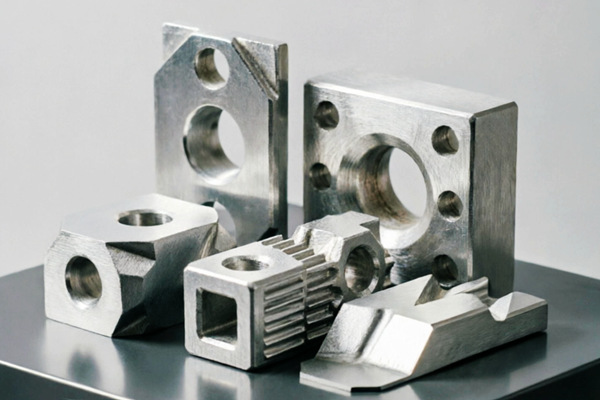
The spectrum of custom part manufacturing is anchored by two primary processes: extrusion and CNC machining, each offering distinct advantages depending on the project's complexity and volume. Aluminum extrusion is a high-efficiency process that forces heated billet through a shaped die, creating continuous profiles with complex cross-sections. This method is exceptionally cost-effective for medium to high-volume production runs, providing a near-net shape that minimizes material waste and subsequent machining. In contrast, CNC (Computer Numerical Control) machining offers unparalleled precision and flexibility. By subtractively carving parts from solid stock, machining can produce intricate internal cavities, tight tolerance holes, and complex undercuts that extrusion cannot achieve. This is the process of choice for low-volume prototypes, highly intricate components, and scenarios where dimensional accuracy of ±0.001 inches is non-negotiable.
The adaptability of aluminum is further amplified by the vast array of available alloys, each optimized for different physical and mechanical requirements. The 6000 series, particularly 6061, is often considered the workhorse of the industry, boasting a balanced combination of strength, weldability, and corrosion resistance. For applications demanding superior machinability and a bright finish, 2024 or 6063 are often specified. Conversely, the high-strength 7000 series, such as 7075, is utilized in demanding applications like aircraft fittings and missile parts, where stress resistance is paramount. Customization does not stop at the alloy; it extends to the thermal treatment. Tempering processes, such as T5 and T6 heat treatments, allow engineers to further tailor the material's hardness and yield strength to suit the specific loading conditions of the final assembly.
Beyond the primary shape, the final performance and aesthetic of a custom aluminum part are dictated by post-processing and surface finishing. Anodizing, the process of growing a controlled oxide layer on the surface, is a critical step for many aluminum parts. It drastically increases surface hardness, improves wear resistance, and allows for the addition of vibrant color dyes for identification or branding. For parts experiencing high friction, hard anodizing provides a wear-resistant surface that can rival the hardness of tool steel. Alternatively, powder coating offers a thicker, robust protective layer ideal for outdoor components, while chemical conversion coatings (such as Alodine) provide a conductive base for electrical grounding without the build-up of anodizing.
The decision to invest in custom aluminum parts is frequently driven by the need for application-specific optimization, but it comes with considerable cost implications. The high initial tooling costs for extrusion dies or the setup fees for complex machining can be prohibitive for small quantities. However, when amortized across a production run, the per-unit cost often drops below that of generic parts once assembly labor and secondary modifications are factored in. The true value, however, lies in the lifecycle cost. A custom part designed specifically for its load path uses less material, reducing overall product weight. Its optimized geometry extends the lifespan of moving parts by reducing stress concentrations, thereby lowering maintenance and replacement frequency.
Looking toward the horizon, the industry is witnessing a paradigm shift with the integration of additive manufacturing and advanced simulation. 3D printing with aluminum powders is now enabling the creation of lattice structures and topology-optimized shapes that were previously impossible to machine, offering weight savings of up to 60% while maintaining structural rigidity. Complementing this, advanced CAD/CAE software allows designers to simulate stress, thermal flow, and vibration before a single chip is cut. This digital twin approach mitigates risk, ensuring the first physical part is close to the final production standard.
In conclusion, custom aluminum parts are far more than simple components; they are precision tools of engineering that bridge the gap between theoretical design and physical reality. As global standards for sustainability tighten and performance demands escalate, the role of bespoke aluminum fabrication will only grow. It empowers engineers to remove the dead weight of over-engineering, utilize the material's unique properties to the fullest, and ultimately, create machines that are faster, more efficient, and more durable. In the quest for engineering excellence, the custom aluminum part is not just an option; it is a fundamental prerequisite.


