

Strategic Advantage of Rapid Sheet Metal Parts in Low-Volume Manufacturing
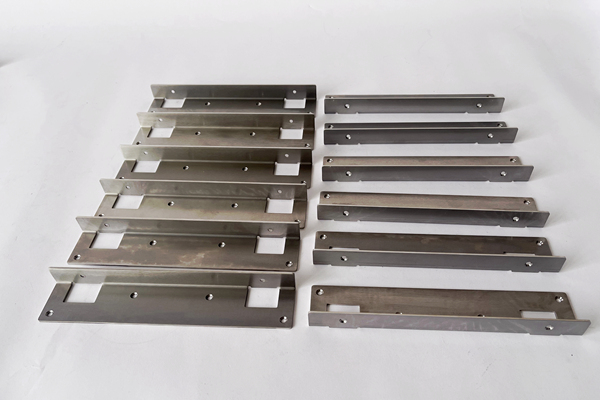
In the modern manufacturing landscape, the ability to move quickly from design to physical product can separate market leaders from those who miss opportunities. For businesses developing new products, bridging the gap between prototyping and mass production requires a manufacturing approach that balances speed, quality, and cost. This is where rapid sheet metal parts have emerged as a game-changing solution for low-volume production runs.
Understanding the Value of Rapid Sheet Metal Parts
Sheet metal fabrication has traditionally been associated with high-volume production, where the significant upfront investment in tooling and dies could be amortized across thousands or millions of units. However, this conventional model creates substantial barriers for startups, innovators, and established companies needing smaller quantities.
Rapid sheet metal parts manufacturing flips this paradigm. By leveraging advanced technologies and streamlined processes, manufacturers can now produce high-quality metal components in small batches without the prohibitive costs and extended lead times of traditional methods.
The applications span virtually every industry—from aerospace brackets and automotive prototypes to medical device enclosures and consumer electronics chassis. Whether you need a single part for functional testing or 500 units for a limited production run, the rapid sheet metal approach delivers measurable advantages.
Key Benefits of Choosing Rapid Sheet Metal for Low-Volume Production
1. Dramatically Reduced Lead Times
Time-to-market pressure has never been more intense. Companies that can iterate quickly and launch faster gain competitive advantages that translate directly to market share and revenue.
Traditional sheet metal fabrication often requires weeks or months for tooling production alone. In contrast, rapid sheet metal parts can be produced in days. Advanced processes like laser cutting, CNC bending, and digital sheet forming eliminate the need for complex hard tooling, enabling same-week turnaround that was unimaginable a decade ago.
For example, modern digital sheet forming technology allows manufacturers to shape metal directly from digital files without stamping dies or custom molds. Parts that previously required eight weeks for tooling production can now be produced within 24-48 hours.
2. Cost-Effective Without Compromising Quality
The economics of low-volume production have historically been challenging. Setup costs that make sense for 100,000 units become prohibitive for 100 units. Rapid sheet metal parts manufacturing addresses this through several mechanisms:
Elimination of hard tooling: By utilizing processes that don't require dedicated dies and stamps, manufacturers eliminate the single largest cost barrier to small-batch production.
Reduced setup time: Modern equipment with quick-change capabilities means that switching between different parts takes minutes rather than hours, making short runs economically viable.
Lower minimum order quantities: Whereas traditional stamping might require minimum quantities of 5,000-10,000 units, rapid sheet metal services commonly accept orders from 1 to 1,000 parts.
The result? Per-part costs that make sense for prototypes, bridge production, and niche market products.
3. Design Flexibility and Iteration Capability
Product development rarely follows a straight line. Designs evolve based on testing results, user feedback, and new insights. The rigidity of traditional tooling punishes design changes with expensive modifications or complete tool replacement.
Rapid sheet metal parts embrace design evolution. Because production doesn't require hard tooling, design modifications can be implemented between batches—or even between individual parts—with minimal cost impact. This flexibility enables:
- Iterative prototyping: Test multiple design variations simultaneously
- Design optimization: Refine based on functional testing without financial penalty
- Customization: Produce variations for different market segments or applications
4. Material Variety and Performance
One concern about rapid manufacturing has historically been limited material options. Today's rapid sheet metal parts processes have overcome this limitation, supporting an extensive range of materials including:
- Aluminum alloys (5052, 6061)
- Stainless steel (301, 304, 316/316L)
- Cold rolled steel
- Copper and brass
Each material brings specific properties—strength, corrosion resistance, conductivity, weight—allowing engineers to select precisely what their application requires rather than compromising based on manufacturing constraints.
5. Quality That Meets Production Standards
Rapid doesn't mean rough. Modern rapid sheet metal parts achieve tolerances that satisfy even demanding applications. Laser cutting achieves ±0.2mm accuracy, while CNC bending delivers angular precision within ±1 degree.
Surface finishing options further enhance quality, with services including:
- Bead blasting for uniform matte finishes
- Anodizing (Type II and III) for corrosion resistance and aesthetics
- Powder coating for durability and color options
- Chem film for conductivity and paint adhesion
These finishes ensure that rapid sheet metal parts not only function correctly but also present professionally—essential for customer-facing products or design reviews.
Technologies Powering Rapid Sheet Metal Parts
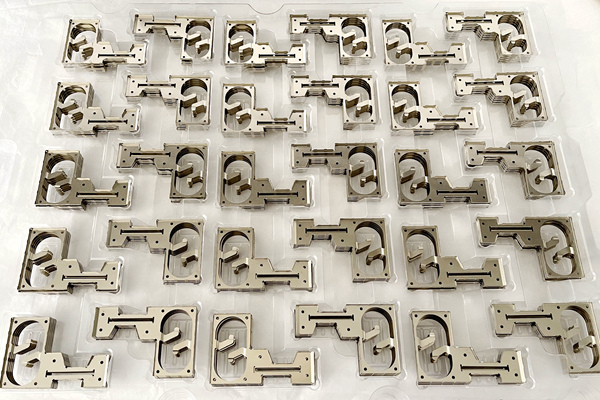
Understanding the technologies behind rapid sheet metal manufacturing helps in selecting the right approach for your specific needs:
Laser Cutting
High-power lasers cut sheet metal with precision and speed, handling thicknesses from 0.5mm to 10mm. The process creates clean edges without mechanical stress, making it ideal for complex geometries.
CNC Bending
Computer-controlled press brakes form precise angles and shapes. Modern equipment can handle multiple bends in a single setup, ensuring consistency across parts.
Digital Sheet Forming
Emerging technology uses software-controlled tooling to shape metal without dedicated dies. Particularly valuable for complex curves and deep draws, it offers unprecedented flexibility for rapid sheet metal parts.
Rapid Tooling for Complex Features
For parts requiring drawn features or ribs, manufacturers can create simple tooling from machined metal, plastic, or even wood—producing complex geometries in days rather than months.
When to Choose Rapid Sheet Metal Parts
Several scenarios make rapid sheet metal the optimal choice:
Product Development and Testing: Before committing to mass production tooling, validate form, fit, and function with parts identical to final production specifications.
Bridge Production: While awaiting hard tooling for high-volume production, use rapid sheet metal to satisfy initial market demand and maintain momentum.
Niche and Custom Products: For products serving specialized markets with limited total volumes, rapid sheet metal provides an ongoing production solution without tooling amortization challenges.
Seasonal or Promotional Items: Produce exactly what you need when you need it, avoiding inventory carrying costs.
Partnering for Success
The effectiveness of rapid sheet metal parts depends significantly on your manufacturing partner's capabilities and expertise. Experienced providers offer:
- Design for manufacturability guidance
- In-house process control across cutting, forming, welding, and finishing
- Quality management systems ensuring consistent results
- Supply chain integration for raw materials and components
When evaluating partners, look for demonstrated experience with low-volume projects, relevant certifications (ISO 9001:2015, ITAR registration as applicable), and the technical expertise to handle complex requirements.
Conclusion
The manufacturing landscape continues to evolve, with agility becoming as important as scale. Rapid sheet metal parts represent this new paradigm—delivering quality metal components with the speed and flexibility that product development demands and the cost structure that low-volume production requires.
Whether you're bringing a new product to market, responding to changing customer needs, or producing specialized equipment in limited quantities, rapid sheet metal fabrication provides a strategic advantage. By eliminating traditional barriers of time, cost, and minimum quantities, it empowers innovation and accelerates the journey from concept to customer.
As technology continues advancing, the capabilities and applications of rapid sheet metal parts will only expand—making now the ideal time to explore how this approach can transform your manufacturing strategy.


