

Guide to Stainless Steel CNC Machining Services Precision
In the world of precision manufacturing, few materials command as much respect and demand as stainless steel. Known for its exceptional strength, corrosion resistance, and aesthetic appeal, stainless steel has become the go-to material for industries ranging from aerospace to medical devices. But what makes stainless steel CNC machining services so essential in today's manufacturing landscape? This comprehensive guide explores the advantages, applications, and critical considerations when choosing a partner for your next project.
Understanding Stainless Steel in CNC Machining
Stainless steel is fundamentally an alloy of iron containing at least 10.5% chromium, which gives it remarkable corrosion-resistant properties. This chromium content forms a passive layer of chromium oxide on the surface—only 2-5 nanometers thick—that instantly regenerates if damaged during machining, ensuring long-term protection.
Common Grades for CNC Machining
Different applications require different stainless steel grades, each offering unique characteristics:
Austenitic Grades (304, 316): These are the workhorses of the stainless steel family. Grade 304 offers excellent corrosion resistance and formability, while 316 adds molybdenum for superior resistance against chlorides and chemicals, making it ideal for marine and medical applications.
Martensitic Grades (410, 420): With higher carbon content, these grades can be heat-treated to achieve exceptional hardness and strength, perfect for cutting tools and surgical instruments.
Precipitation-Hardening Grades (17-4 PH): Offering an outstanding combination of high strength and moderate corrosion resistance, 17-4 PH is widely used in aerospace and medical components.
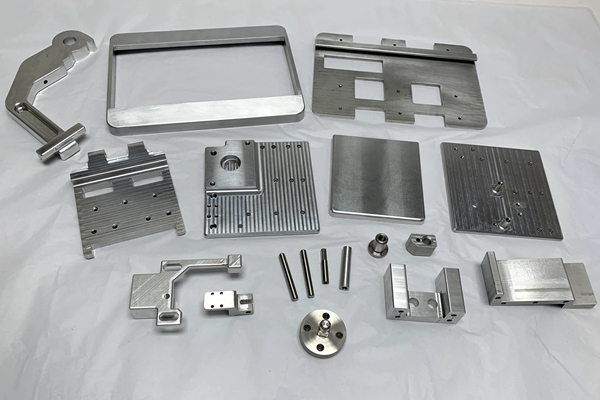
The Advantages of Stainless Steel CNC Machining
1. Superior Corrosion Resistance
The defining characteristic of stainless steel is its ability to resist rust and corrosion. This property makes it indispensable for applications in harsh environments—marine settings, chemical processing plants, and food production facilities where exposure to moisture and cleaning agents is constant. Unlike other metals that require protective coatings, stainless steel maintains its integrity throughout its service life.
2. Exceptional Strength and Durability
Stainless steel offers a remarkable strength-to-weight ratio, with Brinell hardness ranging from 80 to 600 depending on the grade. Components machined from stainless steel can withstand significant stress, impact, and repeated loading without failure. This durability translates directly to longer component life and reduced maintenance costs for end users.
3. Heat Resistance and Temperature Stability
With melting points ranging from 1325-1530°C, stainless steel maintains its mechanical properties even at elevated temperatures. This makes it ideal for aerospace engine components, automotive exhaust systems, and industrial machinery that operates in high-heat environments.
4. Aesthetic Appeal and Hygiene
The sleek, modern appearance of stainless steel makes it a preferred choice for consumer-facing products, architectural elements, and medical equipment. Its non-porous surface is easy to clean and sterilize, meeting stringent hygiene standards in pharmaceutical and food processing industries.
5. Biocompatibility
For medical device manufacturers, stainless steel's biocompatibility is invaluable. Surgical instruments, implants, and medical equipment components can be safely used within the human body or in sterile surgical environments without adverse reactions.
Precision Capabilities in Stainless Steel Machining
Modern CNC technology has transformed what's possible with stainless steel. Today's advanced machining centers achieve tolerances as tight as ±0.005mm and surface finishes down to Ra0.2μm. This level of precision enables the production of complex geometries that would have been impossible just decades ago.
Advanced Machining Techniques
Multi-Axis Machining: Five-axis CNC centers can machine complex contours and undercuts in a single setup, reducing handling time and improving accuracy.
Hybrid Manufacturing: Some facilities now combine metal 3D printing with CNC finishing—a "near-net shaping + precision machining" approach that reduces material waste by up to 95% while achieving the tight tolerances required for critical features.
Automated Deburring: Innovations like ceramic brush deburring systems have transformed post-processing. One medical manufacturer reduced deburring time from 180 seconds to just 18 seconds per part—an 89% reduction—while eliminating thread damage and scrap.
Industry Applications
Aerospace and Defense
The aerospace industry demands components that combine lightweight construction with exceptional strength and reliability. Stainless steel CNC machining produces critical parts including engine mounts, structural brackets, fasteners, and landing gear components that must withstand extreme forces and temperatures while maintaining dimensional stability.
Medical Devices and Healthcare
Precision is non-negotiable in medical manufacturing. Stainless steel CNC machining creates surgical instruments, orthopedic implants, dental tools, and imaging equipment components with micron-level accuracy. The material's ability to withstand repeated sterilization cycles without degradation ensures patient safety and instrument longevity.
Automotive and Motorsports
From exhaust systems and fuel tanks to custom performance components, stainless steel delivers the strength and heat resistance required for demanding automotive applications. The material's durability under thermal cycling and exposure to road salts and chemicals makes it ideal for both structural and aesthetic components.
Food Processing and Pharmaceutical
Equipment in these industries must resist corrosion from frequent cleaning and harsh sanitizing agents. Stainless steel CNC machined parts for food processing lines, pharmaceutical filling equipment, and packaging machinery maintain hygiene standards while providing decades of reliable service.
Robotics and Automation
Robotic systems require components with exceptional repeatability and precision. Stainless steel CNC machining produces robot arms, joint housings, grippers, and actuator components that maintain accuracy through millions of cycles.
Challenges and Solutions in Stainless Steel Machining
While stainless steel offers remarkable benefits, it also presents unique machining challenges that require expertise to overcome.
Tool Wear and Heat Generation
Stainless steel's toughness accelerates tool wear compared to softer materials like aluminum. Successful machining requires:
- High-quality carbide or coated cutting tools
- Optimized cutting speeds and feeds
- Adequate cooling and chip evacuation
- Rigid machine setups to minimize vibration
Work Hardening
Many stainless steel grades work-harden rapidly during cutting, making subsequent passes more difficult. Experienced machinists maintain consistent chip loads and avoid dwelling in one area to prevent surface hardening.
Thermal Expansion
Stainless steel's coefficient of thermal expansion requires careful consideration when machining tight tolerances. Controlling coolant temperature and allowing parts to stabilize before final inspection ensures dimensional accuracy.
Quality Assurance and Certifications
Reputable stainless steel CNC machining services maintain rigorous quality management systems. Look for providers with certifications such as:
- ISO 9001 for general quality management
- ISO 13485 for medical device manufacturing
- IATF 16949 for automotive production
- AS9100 for aerospace applications
Advanced inspection equipment including CMMs (Coordinate Measuring Machines), multi-joint arms, and optical comparators verify that every dimension meets specifications.
Selecting the Right Machining Partner
When evaluating stainless steel CNC machining services, consider these factors:
Experience and Expertise: Look for providers with demonstrated success in your industry and with your specific stainless steel grades.
Equipment Capabilities: Modern multi-axis CNC machines, automated pallet systems, and integrated inspection capabilities indicate investment in quality.
Material Sourcing: Partners who stock certified materials and can trace raw material certificates provide added confidence.
Surface Finishing Options: From as-machined finishes to electropolishing, passivation, and powder coating, comprehensive finishing capabilities streamline production.
Communication and Support: Clear communication about design for manufacturability, lead times, and potential cost savings demonstrates true partnership.
Conclusion
Stainless steel CNC machining services represent the intersection of advanced material science and precision manufacturing technology. The unique combination of corrosion resistance, strength, heat tolerance, and aesthetic appeal makes stainless steel indispensable across virtually every industry.
Whether you're developing medical devices that must perform flawlessly inside the human body, aerospace components that face extreme conditions, or automotive parts that combine performance with durability, stainless steel CNC machining delivers the precision and reliability your products demand.
As manufacturing technology continues to advance—with hybrid additive-subtractive processes, automated quality inspection, and increasingly sophisticated CAM programming—the possibilities for stainless steel components will only expand. By partnering with an experienced, well-equipped machining service, you ensure your designs achieve their full potential in this remarkable material.
Ready to bring your stainless steel designs to life? Contact our engineering team today to discuss your project requirements and discover how our precision CNC machining services can deliver the quality, accuracy, and reliability you need.


