

The Role of China Aluminum CNC Milling Parts in Product Development
In the fast-paced world of product development, the ability to move from a digital concept to a physical prototype quickly and accurately is a decisive competitive advantage. Among the many technologies that enable this agility, CNC machining of aluminum parts has emerged as a cornerstone of rapid prototyping and custom handboard (often called "hand panel" or appearance model) fabrication. China, as a global manufacturing hub, has become a leading source for high-precision aluminum CNC milling parts, serving industries ranging from consumer electronics and automotive to medical devices and aerospace. This article explores why aluminum CNC milling is indispensable for rapid prototyping, how Chinese manufacturers have built a robust ecosystem around it, and what buyers should consider when sourcing custom handboard parts.
Why Aluminum and CNC Milling for Rapid Prototyping?
Rapid prototyping demands materials and processes that balance speed, cost, and functional fidelity. Aluminum alloys—particularly 6061, 7075, and 5052—offer an exceptional combination of properties. They are lightweight, corrosion-resistant, and possess excellent strength-to-weight ratios. More importantly, aluminum is highly machinable, allowing CNC mills to remove material at high feed rates while maintaining tight tolerances. Unlike 3D-printed plastics, aluminum prototypes can be anodized, bead-blasted, brushed, or painted to mimic the final production finish, making them ideal for "handboards"—the physical models used for design verification, trade shows, and user testing.
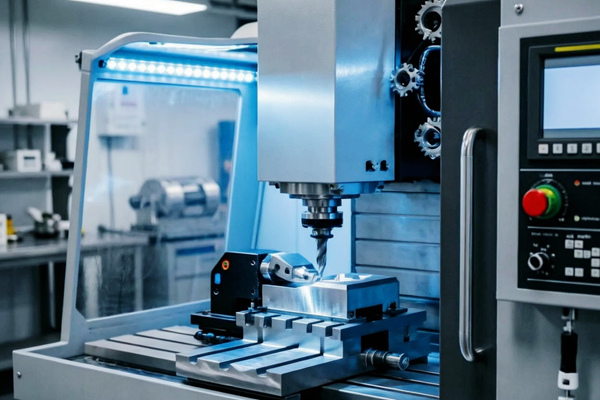
CNC milling, a subtractive process, starts with a solid block of aluminum and uses rotating cutting tools to carve out the desired geometry. For prototyping, 3-axis and 5-axis CNC machines are common. 5-axis machining is particularly valuable for complex organic shapes, undercuts, and deep cavities that would otherwise require multiple setups. The result is a part with dimensional accuracy often within ±0.01 mm, far exceeding the typical tolerances of desktop 3D printing. This precision is critical for functional testing—snap fits, threaded inserts, and moving assemblies must behave exactly as they would in mass production.
The Handboard Customization Workflow in China
Chinese rapid prototyping suppliers have refined a workflow that minimizes lead time while maximizing customization. A typical project begins with a customer providing a 3D CAD file (STEP, IGES, or X_T). Engineers then perform a design-for-manufacturability (DFM) analysis, flagging thin walls, deep pockets, or features that might require special tooling. Once approved, the file is programmed into CAM software, and the aluminum block is fixtured on the machine.
For handboards, surface finish is paramount. After milling, parts often undergo manual polishing, sandblasting, or anodizing. Chinese factories frequently offer a "one-stop" service: CNC milling, post-processing, and even assembly of multiple components into a functional prototype. This vertical integration is a key reason why global companies source from China. A handboard that might take two weeks to produce in-house can often be delivered in 3–5 days from a Chinese partner, even with complex finishing.
Advantages of Sourcing from China
China’s dominance in aluminum CNC milling for prototyping is not accidental. It stems from a dense supply chain of raw material suppliers, tooling manufacturers, and skilled machinists. Clusters in Guangdong (Shenzhen, Dongguan), Jiangsu, and Zhejiang provinces host thousands of CNC shops, many specializing in low-volume, high-mix production. This competition drives down prices and shortens lead times.
Moreover, Chinese suppliers have invested heavily in automation and quality control. Many now operate lights-out machining cells with robotic loading, enabling 24/7 production. Inspection is typically performed with coordinate measuring machines (CMM) and optical comparators, and full dimensional reports (FAI) are provided. For handboard projects, suppliers often offer a range of aluminum alloys and finishes, allowing designers to simulate the final product’s look and feel.
Communication has also improved. English-speaking project managers, instant messaging apps, and cloud-based file sharing have removed many historical barriers. A customer in Europe or North America can upload a CAD file in the morning and receive a quote with DFM feedback within hours.
Challenges and Best Practices
Despite the advantages, sourcing aluminum CNC milling parts from China requires diligence. Intellectual property protection is a concern; using a supplier with a signed NDA and a reputation for serving Western clients is essential. Quality consistency can vary, so requesting a first-article inspection and, for critical handboards, a video walkthrough of the machining process is wise. Shipping and customs also add time; for urgent prototypes, express air freight is common, but costs can be significant.
Best practices include: providing clear 3D files and 2D drawings with tolerances; specifying surface finish and color using standard charts (e.g., Pantone, RAL); and discussing whether anodizing or painting will affect critical dimensions. For handboards that will be handled by users, edge breaks and deburring are non-negotiable—Chinese suppliers familiar with consumer electronics will understand this implicitly.
Conclusion
China aluminum CNC milling parts have become a vital enabler of rapid prototyping and custom handboard fabrication. The combination of aluminum’s material properties, CNC milling’s precision, and China’s manufacturing ecosystem allows product teams to iterate faster and bring more refined designs to market. While challenges exist, they are manageable with clear communication and quality agreements. As products grow more complex and timelines shrink, the partnership between global designers and Chinese CNC prototyping specialists will only deepen. For any team serious about physical product development, mastering this supply chain is no longer optional—it is a strategic imperative.


