

Custom Aluminum Prototype Fabrication in Modern Product Development
In the fast-paced world of manufacturing, speed and precision are non-negotiable. Before a new product ever reaches mass production, it must survive rigorous testing, design validation, and real-world simulation. That’s where custom aluminum prototype fabrication becomes not just useful, but essential.
Aluminum has long been a favorite material for prototyping—and for good reason. It offers an excellent strength-to-weight ratio, natural corrosion resistance, thermal conductivity, and machinability. More importantly, aluminum prototypes behave very similarly to final production parts, especially when compared to plastic or additive-only samples. This allows engineers to conduct accurate stress tests, fitment checks, and functional evaluations before committing to expensive tooling.
Why Go Custom for Prototypes?
Off-the-shelf components rarely meet the specific geometric, structural, or thermal demands of innovative designs. Custom fabrication ensures that every feature—be it a complex internal channel, a thin wall, or a threaded hole—is built exactly to your CAD specifications. Common custom processes include:
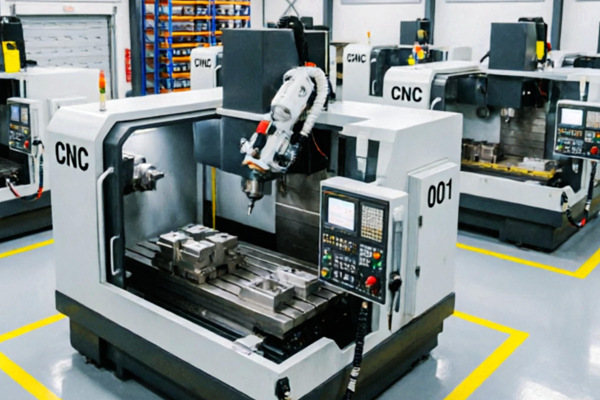
CNC Machining: Ideal for tight tolerances and complex geometries. CNC milling and turning can produce aluminum prototypes with repeatability as fine as±0.005 inches.
Sheet Metal Fabrication: Laser cutting, bending, and stamping allow for enclosures, brackets, and chassis parts that mimic final sheet metal assemblies.
Extrusion & Finishing: For profiles or parts requiring anodizing, bead blasting, or polishing, custom prototyping bridges the visual and tactile gap between“test piece”and“market sample.”
The Engineering Value of Aluminum Prototypes
A high-fidelity aluminum prototype reveals issues that simulations might miss. For example, thermal dissipation in a LED housing or EMI shielding in a RF device can only be accurately measured using metal. Likewise, vibration analysis and fatigue testing require the exact material properties of aluminum.
By catching design flaws early—such as interference fits or manufacturing bottlenecks—companies avoid costly mold modifications and production delays later. In short, a custom aluminum prototype is the lowest-risk investment before a production run.
Speed vs. Quality: A False Choice
Many believe that custom metal prototypes require long lead times. In reality, modern digital fabrication workflows have shortened cycles dramatically. Direct from CAD to CNC, with automated toolpath generation, a simple aluminum bracket can be produced in 24–48 hours. More complex assemblies may take a week, but that’s a fraction of the time needed for hard tooling.
The key is choosing a fabrication partner that understands both design for manufacturability (DFM) and rapid iteration. They should offer feedback on draft angles, wall thicknesses, and material grades—typically 6061 or 7075 aluminum—to match your application’s mechanical requirements.
From Prototype to Production: A Seamless Transition
One overlooked advantage of aluminum prototypes is the ease of scaling. Many CNC programs and sheet metal NC codes used for prototypes can be transferred directly to production runs. This reduces requalification time and ensures that what works in testing will work in volume manufacturing.
Additionally, custom prototypes allow for parallel engineering: while one batch undergoes field testing, a second iteration can be refined and fabricated—without waiting for production line availability.
Final Thoughts
Custom aluminum prototype fabrication is not a luxury; it is a strategic step toward reliable, market-ready products. Whether you’re designing aerospace brackets, medical device housings, or automotive sensors, an accurately machined aluminum sample protects your timeline, budget, and reputation.
When time, precision, and material integrity matter, partnering with an experienced fabricator makes all the difference. Sanwo Metal specializes in on-demand custom aluminum prototyping with a focus on tight tolerances, rapid turnaround, and seamless DFM support. From single validation samples to bridge tooling, Sanwo Metal ensures your design intent carries through every machining pass—helping you move from concept to production with confidence and efficiency.


