

The Strategic Edge of Five-Axis Precision Machining in Modern Manufacturing
In the competitive landscape of modern manufacturing, the pursuit of geometric complexity, tighter tolerances, and reduced lead times has elevated five-axis precision machining from a niche capability to a strategic necessity. Unlike traditional three-axis systems, which rely on the workpiece moving linearly beneath a fixed spindle, five-axis machining introduces two additional rotational axes. This configuration allows the cutting tool to approach the workpiece from virtually any angle, unlocking unprecedented design freedom and operational efficiency. For industries ranging from aerospace to medical devices, mastering this technology is no longer optional—it is a competitive imperative.
Understanding the Mechanics and Advantages
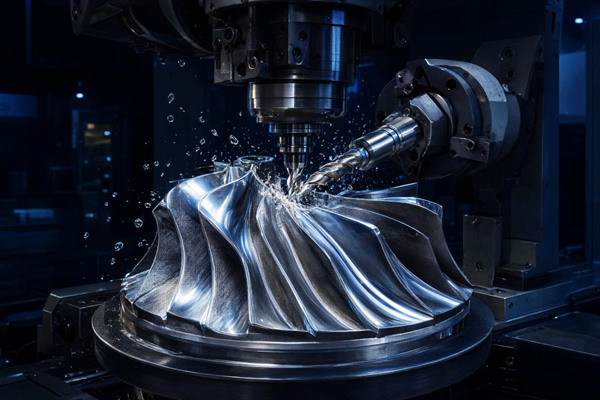
At its core, five-axis precision machining involves simultaneous motion along the X, Y, and Z linear axes, combined with rotation around the A and B (or C) axes. This kinematic flexibility delivers several transformative benefits. First, it enables the machining of intricate geometries—such as impellers, turbine blades, and complex medical implants—in a single setup. By eliminating the need for multiple fixtures and manual repositioning, manufacturers drastically reduce setup time and, more importantly, eliminate the cumulative positioning errors that plague multi-setup operations.
Second, the technology facilitates the use of shorter, more rigid cutting tools. In conventional machining, long tools are often required to reach deep cavities, leading to deflection and chatter. Five-axis machining allows the tool to be tilted, maintaining optimal contact with the workpiece while using a shorter gauge length. This results in superior surface finishes, extended tool life, and higher material removal rates. The ability to keep the tool perpendicular to the cutting surface—known as "normal vector machining"—also ensures uniform wear and consistent quality across complex contours.
Driving Forces: Aerospace and Medical Applications
Two sectors exemplify the value of five-axis precision machining. In aerospace, components like blisks (bladed disks) and structural airframe parts demand lightweight designs with monolithic construction. Five-axis machining enables the production of these parts from solid billets with minimal waste, meeting stringent fatigue and strength requirements. Similarly, in the medical field, orthopedic implants and surgical instruments require biocompatible materials machined to micron-level tolerances. The ability to achieve complex undercuts and polished surfaces in one cycle reduces the risk of contamination and ensures patient safety.
Technical Considerations for Optimization
Achieving true precision with five-axis systems requires more than just advanced hardware. Success hinges on sophisticated CAM programming, dynamic collision avoidance, and thermal stability. The interpolation of rotary axes introduces nonlinear errors, which must be compensated through calibration and post-processing. Furthermore, the synchronization of five axes demands high-performance CNC controllers capable of look-ahead processing to maintain feed rates without sacrificing accuracy. Shops investing in this technology must also prioritize staff training, as the complexity of setup and programming is significantly higher than in three-axis operations.
Economic and Strategic Impact
While the initial capital investment for five-axis machining centers is substantial, the total cost of ownership often proves favorable. Reduced labor costs, fewer fixtures, minimized scrap, and the ability to machine hard-to-cut materials (such as titanium and Inconel) contribute to a rapid return on investment. Strategically, the technology enables manufacturers to bid on complex, high-value contracts that are inaccessible to competitors with three-axis capabilities. It also supports agile manufacturing, allowing for rapid prototyping and low-volume production without dedicated tooling.
Conclusion
Five-axis precision machining represents a convergence of mechanical engineering, control theory, and digital manufacturing. As industries continue to push the boundaries of design and performance, the ability to manipulate a cutting tool along five simultaneous axes will remain a cornerstone of high-value production. For manufacturers seeking to differentiate themselves through quality, efficiency, and innovation, embracing this technology is not merely an upgrade—it is a commitment to excellence in an increasingly demanding global market.


