

The Strategic Advantage of Low Volume Aluminum Castings
In the fast-paced world of product development, speed and precision often clash with budget constraints. For engineers and procurement specialists, the journey from a digital 3D model to a physical, testable component is a critical bottleneck. While high-volume die casting is the ultimate destination for mass production, it is often impractical and financially reckless for the early stages of development. This is where low volume aluminum castings emerge as the unsung hero of modern manufacturing, specifically tailored for aluminum prototype parts and bridge tooling.
Why Aluminum for Prototyping
Aluminum remains the material of choice for functional prototypes and low-volume production due to its unique balance of properties. It offers an excellent strength-to-weight ratio, inherent corrosion resistance, and superior thermal and electrical conductivity. More importantly, aluminum is forgiving. It machines easily, welds cleanly, and responds well to various surface finishing techniques, from anodizing to powder coating.
When you are building a prototype, you are not just looking for a visual model—you need a part that mimics the mechanical behavior of the final production component. Plastic 3D-printed parts may look the part, but they cannot replicate the thermal expansion or structural fatigue of metal. Low volume aluminum castings fill this gap perfectly, providing near-net-shape components that can be tested, mounted, and even field-trialled under real-world conditions.
Defining "Low Volume" in the Casting World
In the context of metal casting, "low volume" typically refers to production runs ranging from 5 to 5,000 units per year. This is a stark contrast to high-pressure die casting (HPDC), which often requires annual quantities of 50,000+ to amortize the substantial tooling costs—often $20,000 to $100,000 for a single die.
For low volume manufacturing of aluminum parts, the tooling strategy changes completely. Instead of hardened steel dies, foundries utilize:
- Silicone molds for very short runs (under 20 parts)
- Plaster molds for intricate, thin-walled prototypes
- Sand casting using 3D-printed cores (no hard tooling required)
- Permanent molds made from machined aluminum or kirksite (a low-melting-point alloy)
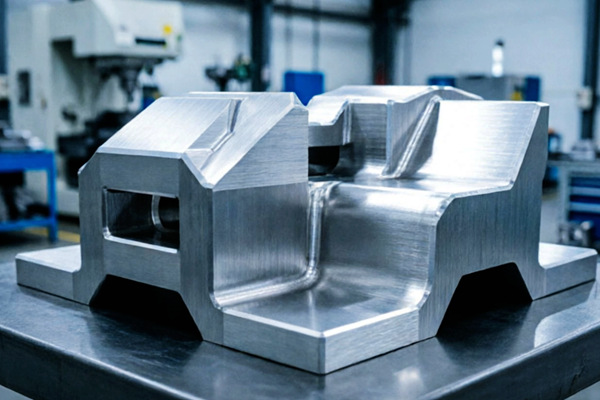
The Core Technologies Driving Low Volume Aluminum Castings
To produce high-quality aluminum prototype parts without breaking the bank, professional manufacturers rely on three primary processes:
1. CNC-Pattern Sand Casting
Traditional green sand casting uses a wooden or metal pattern. By pairing this with CNC-machined patterns, manufacturers can produce dimensionally accurate sand molds for low volumes without hard tooling. This method is ideal for large, structural parts (e.g., brackets, housings) where design changes are anticipated.
2. Investment Casting (Lost Wax) with 3D-Printed Patterns
For complex geometries—think turbine housings or fluid manifolds—investment casting is superior. Rather than injecting wax into a metal die (which is expensive), low volume runs utilize stereolithography (SLA) or PolyJet printed patterns. These printed wax-like materials are coated in ceramic, burned out, and filled with molten aluminum. The result: near-net-shape parts with surface finishes as fine as 125 RMS, requiring minimal machining.
3. Gravity or Low-Pressure Permanent Mold
For runs between 100 and 2,000 units, a machined aluminum permanent mold is a smart investment. Unlike sand casting, a permanent mold can be reused hundreds of times. Gravity pouring is simple and cost-effective, while low-pressure filling reduces porosity and improves mechanical properties. This is the "bridge tooling" solution—cheaper than die casting but faster than sand casting.
Cost Dynamics: Where You Save Money
The most common misconception is that low volume means low cost per part. In reality, low volume aluminum castings shift the cost away from tooling and toward piece price and setup. Here is how the economics work:
Zero to Low Tooling: Using 3D-printed sand molds or printed investment patterns eliminates hard tooling entirely. You pay only for the CAD-to-casting conversion and the material.
Design Agility: If you find a flaw in the prototype, you simply modify the digital file and recast. There is no sunk cost in a steel die. This "iteration insurance" is invaluable during R&D.
Reduced Inventory Risk: You are not forced to order 10,000 units to reach a price break. You can order 50 units, test them, order 200 more after design tweaks, and then scale to 1,000.
Surface Finish and Dimensional Tolerances
A common resistance to casting prototypes is the fear of rough surfaces and loose tolerances. Modern low volume processes defeat this stereotype:
- 3D-printed sand molds achieve ISO 8062 CT7–CT8 tolerances.
- Investment casting achieves CT5–CT6, rivaling machined parts.
- Permanent mold offers CT6–CT7 with a smooth as-cast surface.
For critical mating surfaces, it is standard practice to leave 0.5mm to 1.5mm of stock for a final CNC finishing pass. Using a hybrid approach—casting the near-net shape and then CNC machining only the critical datums—is the most cost-effective route for functional aluminum prototype parts.
Application Case Studies
Automotive Sensor Housings: An EV startup needed 300 aluminum housings for beta test vehicles. Die casting tooling was quoted at $45,000 and required 12 weeks. A low volume investment casting using 3D-printed patterns delivered the parts in 15 days for $6,500 in total. The housings passed IP6K9K ingress testing and thermal cycling.
Robotic Arm Links: A medical robotics company required 50 aluminum linkages with complex internal lightening pockets. Sand casting with a 3D-printed core eliminated the need for separate core boxes. They received functional parts in 10 days—enough for regulatory testing and small-batch pilot production.
Best Practices for Ordering Low Volume Aluminum Castings
To ensure success when sourcing aluminum prototype parts, follow these operational guidelines:
Embrace DFM (Design for Manufacturing) early. While low volume eliminates die lock concerns, avoid sharp internal corners (keep radii > 1.5mm) and maintain uniform wall thickness (3mm to 6mm is ideal for aluminum).
Specify heat treatment. For structural applications, specify T5 or T6 temper. As-cast aluminum (F temper) has lower strength and elongation.
Request a radiographic or dye penetrant inspection. Low volume processes can introduce micro-porosity. A simple inspection ensures your "prototype" truly represents a production-viable part.
Over-measure the first article. Because low volume uses softer tooling (silicone, sand, printed patterns), the first casting may vary slightly from the CAD. Use a CMM to validate and adjust the digital pattern before running the full batch.
The Future: On-Demand Aluminum Casting
The convergence of digital foundry technologies—binder jet 3D printing of sand, direct metal printing (DMP for tooling inserts), and AI-driven gating design—is erasing the line between prototyping and production. Today, you can upload a STEP file on Monday and receive 50 aluminum castings by Friday. This democratization of metal casting means that low volume is no longer a niche; it is a strategic enabler for agile hardware development.
Conclusion
For any product team moving beyond plastic prototypes, low volume aluminum castings offer the fastest, most economical path to metal parts. They eliminate six-figure tooling risks, accommodate last-minute design changes, and deliver parts that are structurally representative of final production. Whether you need five units for a proof-of-concept or 5,000 for a market pilot, the combination of modern patternless casting methods and aluminum's versatility makes low volume manufacturing not just a viable option, but the smart choice for the iterative engineer. When you choose low volume aluminum castings, you are not just buying parts—you are buying flexibility, speed, and the freedom to innovate without penalty.


