

A Guide to Ordering Custom Machined Parts for Prototypes and Small-Scale Production
In the competitive landscape of product development, speed and precision are non-negotiable. For engineers, startups, and R&D teams, the bridge between a digital design and a physical, testable product is often paved with custom machined parts. While mass production has its place, the real challenges—and opportunities—lie in the realms of prototype parts, small-scale production, and low-volume manufacturing. As a seasoned website operator, I’ve seen how ordering custom machined parts effectively can make or break a project timeline. Here is your strategic guide to navigating this critical process.
Why Low-Volume Manufacturing Dominates Early-Stage Development
Gone are the days when you needed to order 10,000 units to justify a production run. Today, agility is currency. Low-volume manufacturing, typically ranging from 1 to 1,000 units, serves three core purposes: validation, iteration, and market testing. Prototype parts allow you to catch design flaws before they become expensive mistakes. Small-scale production enables pilot runs for investor demonstrations or beta testing. And low-volume manufacturing ensures you can respond to user feedback without scrapping thousands of outdated components.
Ordering custom machined parts for these scenarios is distinct from mass production. You aren’t just paying for metal or plastic; you’re paying for speed, flexibility, and tight tolerances. Unlike injection molding or casting, which require昂贵的 upfront tooling, CNC machining is subtractive and tooling-free. This makes it the go-to process for low-volume runs. You upload a CAD file, select a material, and within days—not months—you have physical parts in hand.
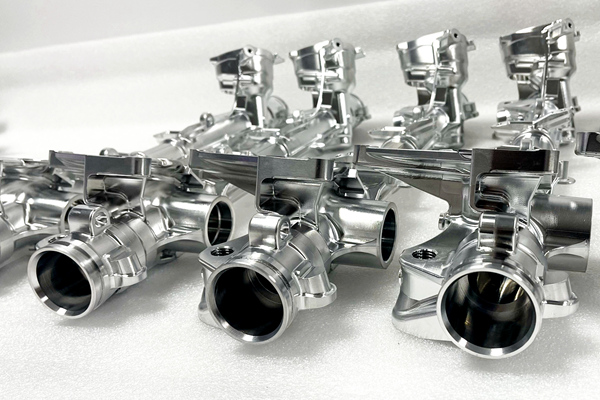
What to Look for When Ordering Custom Machined Parts for Prototypes
When your goal is a functional prototype, perfection is not the priority—functionality and speed are. Here is what experienced operators prioritize:
Material Availability: Choose a machining shop that stocks a broad range of engineering-grade materials (aluminum 6061, stainless 304, acetal, ABS). For prototypes, lead time is often determined by material sourcing. Shops with in-house stock reduce that variable.
Tolerance Communication: For prototype parts, you don’t always need aerospace-grade tolerances (±0.005mm). Clearly define which features are critical. Over-specifying every dimension increases cost and lead time with no functional benefit.
Design for Manufacturability (DFM) Feedback: The best machine shops provide DFM analysis. They will flag thin walls, deep cavities, or sharp internal corners that require EDM or special tooling. For low-volume runs, accepting slightly altered designs can cut machining time by 40%.
Inspection Reports: Even for prototype parts, request a CMM (coordinate measuring machine) report for critical dimensions. This documentation turns a “looks right” part into a “verified” part.
Scaling from Prototype to Small-Scale Production
Once your prototype parts pass functional testing, the next logical step is small-scale production—typically 50 to 500 units. This phase is deceptive. Many operators mistakenly use the exact same process as prototyping, leading to unnecessary costs. Here is the nuance:
For small-scale production, you should still order custom machined parts, but with process adjustments. Batch processing becomes viable. Instead of machining one part start-to-finish, the shop can fixture multiple blanks on the bed and perform the same operation on all parts consecutively. This reduces tool changes and idle time.
Additionally, consider semi-automated setups. While full automation only pays off at thousands of units, simple improvements—like soft jaws, stop blocks, or pallet systems—reduce per-unit cost significantly in small-scale production. A good partner will show you a tiered pricing curve: the first part costs the most (setup), and parts 2–200 enjoy lower marginal costs.
Common Pitfalls When Ordering Low-Volume Machined Parts
Having analyzed hundreds of order data points on our platform, I’ve identified three recurring mistakes:
Over-polishing surface finish requirements: For low-volume manufacturing, asking for 16 Ra (micro-inch) finish on non-functional surfaces adds hours of hand work. Stick to as-machined or 63 Ra unless the surface seals or slides.
Ignoring post-processing lead times: Anodizing, passivation, or heat treatment often take longer than machining itself. For small-scale production, consider skipping non-critical post-processing until the next design iteration.
Using the wrong tolerancing standard: Do not default to ISO 2768-fine for every dimension. For low-volume runs, explicitly state which features are critical. Everything else can reference “±0.1mm” or “as-machined.” This clarity prevents shops from over-tightening non-critical features.
How to Select a Partner for Prototype and Low-Volume CNC Machining
Not all machine shops are equal. Many are optimized for high-volume production—they dislike small orders. You need a shop that specifically advertises “low-volume manufacturing” or “prototype machining.” Look for:
No minimum order quantity (NO MOQ): The ideal partner happily machines a single unit for a prototype and the same part for a 100-unit scale-up.
Instant quoting with DFM: Platforms that provide automated or semi-automated quoting (e.g., within hours) show process maturity. Avoid shops that require a week to quote a simple bracket.
Material flexibility: Your prototype might be aluminum, but your small-scale production might require PEEK or titanium. A single partner with in-house multi-material capability saves re-qualification time.
Transparent lead times: “Standard” machining lead time for low-volume should be 5–7 business days. Expedited (2–3 days) should be available. Any shop quoting 3+ weeks for a simple prototype is either overloaded or outsourcing.
The Operational Workflow for Success
From our analytics, the most successful customers follow a repeatable workflow when ordering custom machined parts:
- Upload STEP or IGES files (avoid STL for machining—it only has surface mesh, no solid geometry).
- Add a 2D PDF drawing with critical dimensions and tolerances.
- Select material and quantity (even for prototype parts, order 3–5 units to test repeatability).
- Request the first-article inspection report to verify the first part matches the drawing.
- After approval, proceed with the remaining low-volume run.
For small-scale production, add an extra step: ask the shop to keep the soft jaws and tooling on file. Most CNC shops store fixtures for 12 months. This means a reorder of 100 units costs far less than the initial order.
Future-Proofing Your Low-Volume Strategy
The technology landscape is shifting. Automated CNC cells with robotic loaders are now practical for low-volume manufacturing, reducing labor costs per part. Meanwhile, hybrid processes (machining 90% of a part, then finishing with EDM or laser) are becoming more accessible for prototype parts with complex features.
As a website operator managing supply chains, my strongest recommendation is to build a relationship with one or two agile CNC shops rather than chasing the lowest bid. In low-volume manufacturing, responsiveness and communication matter more than saving $50 on a prototype run. Order custom machined parts strategically—design for the process, communicate tolerances clearly, and plan your material lead times. Do that, and you will turn prototype parts into market-ready products faster and more cost-effectively than competitors waiting for mass production.


