

Rapid Prototyping of Metal Parts: Accelerating Innovation from Concept to Production
In today's competitive manufacturing landscape, the ability to move from a design concept to a functional metal prototype quickly can determine whether a product reaches the market ahead of competitors or stalls in development limbo. Rapid prototyping of metal parts has therefore become a cornerstone of modern product development, enabling engineers, designers, and manufacturers to validate designs, test functionality, and refine production processes before committing to expensive tooling and full-scale manufacturing.
Why Metal Prototyping Matters
Unlike polymer-based prototyping, metal prototypes offer critical advantages that plastic models simply cannot replicate. They provide accurate mechanical properties, thermal behavior, and electrical conductivity, allowing teams to conduct realistic functional testing. A machined aluminum housing, for instance, can be drop-tested, thermally cycled, and assembled with production-intent components, revealing design flaws that a 3D-printed plastic mock-up would never expose. This fidelity reduces the risk of costly design revisions later in the development cycle and shortens the overall time to market.
Rapid prototyping also plays a vital role in design communication. When stakeholders can hold a metal part in their hands—feeling its weight, examining its surface finish, and testing its fit with mating components—feedback becomes far more concrete and actionable than reviewing a CAD model on a screen.
Key Technologies Behind Metal Rapid Prototyping
Several complementary technologies serve the rapid metal prototyping space. CNC machining remains the workhorse for functional metal prototypes, offering tight tolerances, excellent surface finishes, and access to a broad range of alloys including aluminum, stainless steel, titanium, brass, and engineering-grade plastics. Direct metal laser sintering (DMLS) and selective laser melting (SLM) enable the creation of complex geometries—internal channels, lattice structures, and consolidated assemblies—that would be impossible or prohibitively expensive to machine conventionally. Sheet metal fabrication supports prototype enclosures and brackets, while investment casting and metal injection molding bridge the gap toward low-volume production.
The most effective prototyping strategies often combine these methods. A prototype might begin as a machined component for dimensional verification, evolve into a DMLS part for design validation, and finally transition to production tooling once the design is frozen. This iterative approach demands a manufacturing partner capable of offering multiple processes under one roof—and this is precisely where Sanwo Metal distinguishes itself.
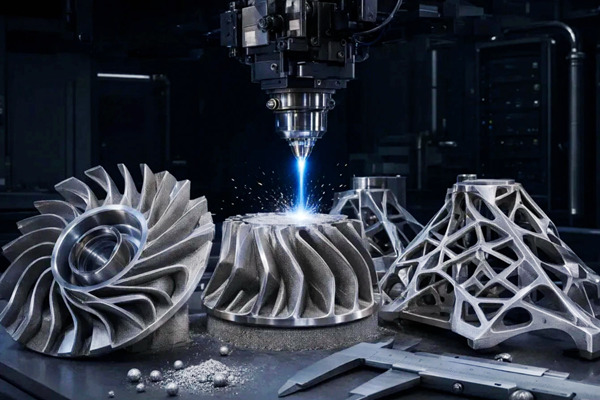
Sanwo Metal: A Trusted Partner for Custom Metal Prototyping
Sanwo Metal has built a reputation for delivering high-quality rapid prototyping and custom metal machining services tailored to the exacting needs of diverse industries, from consumer electronics and automotive to medical devices and industrial automation. What sets Sanwo Metal apart is its integrated service model: customers can move seamlessly from CNC machining and sheet metal fabrication to surface finishing and assembly without juggling multiple vendors, dramatically reducing lead times and communication overhead.
Sanwo Metal's engineering team works closely with clients from the earliest design stages, offering design-for-manufacturability (DFM) feedback that identifies potential issues—thin walls, inaccessible features, tolerance stack-ups—before they become costly problems. This collaborative approach ensures that prototypes are not only functional but also optimized for eventual mass production. The company's rapid turnaround capabilities, often measured in days rather than weeks, allow customers to iterate quickly and maintain aggressive development schedules.
Quality assurance is embedded throughout Sanwo Metal's prototyping process. Dimensional inspection, material certification, and surface finish verification ensure that every prototype meets specification. For projects requiring tight tolerances—often in the range of ±0.01 mm—Sanwo Metal's precision machining capabilities deliver consistent, repeatable results. The company also accommodates low-volume production runs, enabling a smooth transition from prototype to pilot production without re-sourcing.
Conclusion
Rapid prototyping of metal parts is no longer a luxury—it is a strategic necessity for companies seeking to innovate faster and reduce development risk. By partnering with an experienced and versatile manufacturer like Sanwo Metal, teams can transform ideas into tangible, testable metal components with speed, precision, and confidence. In an era where time-to-market advantages are measured in weeks, the right prototyping partner can make all the difference between a product that leads its category and one that arrives too late.


