

How Precision Engineering and Efficient Sourcing Drive Product Success
Aluminum has become one of the most widely specified materials for custom components in modern engineering and product development. Its combination of low density, high strength-to-weight ratio, excellent machinability, and natural corrosion resistance makes it indispensable across aerospace, automotive, electronics, medical devices, industrial automation, and consumer products. However, turning a design concept into a reliable, production-ready aluminum part requires more than selecting the right alloy—it demands a manufacturing partner with the technical depth, equipment, and process discipline to deliver consistency at scale.
Why Custom Aluminum Parts Matter
Off-the-shelf components rarely fit the demanding tolerances and application-specific requirements of contemporary products. Custom aluminum parts manufacturing allows engineers to optimize geometry, wall thickness, surface finish, and mechanical properties for a precise use case. Whether the goal is weight reduction in a structural bracket, thermal management in an electronic enclosure, or hermetic sealing in a medical housing, custom fabrication unlocks design freedom that standard parts cannot provide.
Aluminum alloys such as 6061, 7075, 2024, and 5083 each offer distinct advantages. 6061 is prized for its weldability and balanced strength, while 7075 delivers high strength for aerospace-grade applications. Selecting the correct alloy—and pairing it with the right machining, finishing, and inspection strategy—is where experienced manufacturers add measurable value.
Core Manufacturing Processes
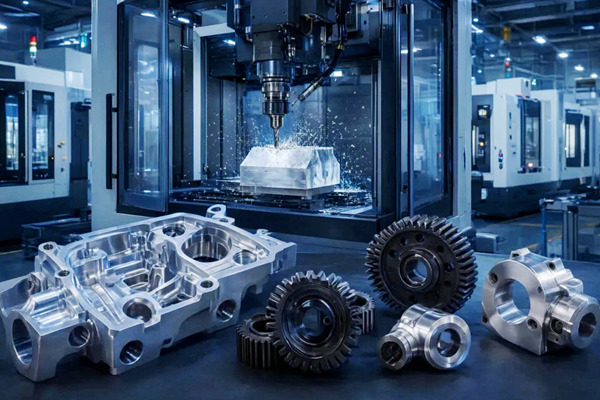
Custom aluminum parts are typically produced through CNC machining (milling and turning), which offers exceptional dimensional accuracy and repeatability. For higher volumes, die casting and extrusion can reduce unit costs, while sheet metal fabrication serves enclosure and chassis applications. Surface treatments—anodizing, bead blasting, powder coating, and laser marking—further enhance durability and appearance.
Quality assurance is equally critical. Dimensional inspection with CMM equipment, material certification, and first-article inspection reports ensure that every batch meets specification. For industries such as aerospace and medical, traceability and adherence to standards like ISO 9001 are non-negotiable.
The Sanwo Metal Advantage
Sanwo Metal has built its reputation on delivering efficient, end-to-end custom aluminum parts manufacturing services. From rapid prototyping to low- and high-volume production, Sanwo Metal combines advanced CNC machining capabilities with a streamlined quotation and production workflow that shortens lead times without compromising quality.
Key strengths of Sanwo Metal's service include:
1. Fast turnaround and responsive quoting:Engineering drawings and CAD files are reviewed promptly, with manufacturability feedback provided early to avoid costly redesigns.
2. Broad material and finish options:A wide range of aluminum alloys and surface treatments are available to match application requirements.
3. Tight tolerance control:Precision machining and rigorous inspection ensure parts meet exacting specifications.
4. Flexible order quantities:Whether a single prototype or thousands of units, Sanwo Metal scales production efficiently.
5. Engineering support:Experienced teams collaborate with customers to optimize designs for cost, strength, and manufacturability.
Conclusion
Custom aluminum parts manufacturing sits at the intersection of material science, precision engineering, and production efficiency. Choosing a partner with proven capabilities in alloy selection, machining, finishing, and quality control directly affects product performance and time-to-market. Sanwo Metal's efficient, customer-focused approach to custom aluminum fabrication makes it a strong choice for organizations seeking reliable, high-quality components delivered on schedule.


