

Precision, Performance, Partnership-Selecting an Aluminum Prototype Machining Manufacturer
In the high-stakes arena of product development, the transition from digital design to physical reality is a moment of profound truth. For engineers, product managers, and supply chain specialists, few materials offer the versatility, strength-to-weight ratio, and machinability of aluminum. However, the success of a project hinges not merely on the material choice, but on the expertise of the entity that shapes it: thealuminum prototype machining manufacturer. This is not a commodity service; it is a strategic partnership that dictates speed-to-market, functional validation, and ultimately, the commercial viability of a product.
Understanding the landscape of modern prototyping requires moving beyond the simplistic view of CNC machining as a subtractive process. Today's leading manufacturers leverage a sophisticated ecosystem of advanced 5-axis technology, real-time process monitoring, and material science to deliver prototypes that are indistinguishable from production parts. When evaluating a manufacturer, one must assess their capability across five critical pillars: technological infrastructure, material proficiency, quality assurance, design for manufacturability (DFM) insight, and logistical agility.
Technological Infrastructure: The Machine Tool Ecosystem
The physical machinery on a shop floor is the first and most transparent indicator of a manufacturer's capability. While 3-axis milling remains a staple for basic geometries, the complexity of modern aluminum alloys and intricate thermal management components requires5-axis simultaneous machining. This technology is non-negotiable for prototypes involving complex impellers, aerospace brackets, or automotive housings with compound angles.
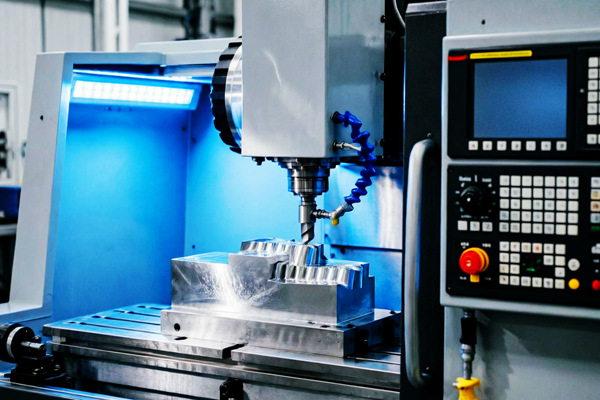
A premieraluminum prototype machining manufacturerdistinguishes itself through its spindle technology. High-speed spindles, often exceeding 30,000 RPM, are essential for achieving the requisite surface finishes on aluminum without generating excessive heat that could induce stress or micro-cracking. Furthermore, the integration of automated tool changers and probe systems allows for lights-out manufacturing, reducing lead times significantly. However, the true differentiator is not the hardware alone but the software integration. Manufacturers utilizing adaptive clearing toolpaths and high-efficiency milling (HEM) strategies can remove material at rates three to four times faster than conventional methods, reducing cycle times and costs while extending tool life.
Material Science and Alloy Proficiency
Aluminum is not a monolithic entity; it is a family of alloys, each with distinct machinability, weldability, and corrosion resistance. The manufacturer's expertise must extend to the specific temper and grade required for the application.
For structural components demanding high strength,7075-T651aluminum is often the benchmark, offering tensile strengths comparable to some steels. However, its high zinc content makes it gummy and prone to work hardening during machining. A manufacturer lacking specific experience with this alloy may experience tool breakage or surface tearing. Conversely,6061-T6is the workhorse for general prototyping due to its excellent machinability and anodizing response. For electronic enclosures requiring superior thermal conductivity,6063is preferred for its extrudability and smooth finish.
Critically, the manufacturer must also manage the internal stresses inherent in aluminum stock. High-quality machining involves stress-relieving techniques or roughing operations that allow the material to release tension before final finishing passes. This ensures that the prototype maintains its dimensional stability when it is removed from the fixture, preventing the "spring back" effect that plagues inferior parts.
Quality Assurance and Metrology: The Verification Layer
A prototype is worthless if it cannot be measured reliably. The capabilities of the CMM (Coordinate Measuring Machine) room are just as important as the machining center. An elitealuminum prototype machining manufactureroperates with a closed-loop quality system. This means that inspection data is not merely a final step but is fed back into the machine tool to adjust for tool wear and thermal expansion in real-time.
When assessing quality assurance, look for manufacturers who employoptical scanningfor free-form surfaces andgear metrologyfor prototypes involving rotary motion. The ability to provide First Article Inspection (FAI) reports per AS9102 standards (for aerospace) or PPAP (Production Part Approval Process) documentation for automotive indicates a robust quality culture. Furthermore, the presence of environmental controls—such as climate-controlled inspection rooms maintaining a consistent 20°C—is crucial when dealing with tight tolerances in the +/- 0.005mm range.
Design for Manufacturability (DFM): The Value-Add Consultant
The greatest value a manufacturer provides often occurs before the first chip is cut. The role of the manufacturer has evolved from a passive "build-to-print" shop to an active DFM partner. Aluminum prototype machining is a process where geometry directly dictates cost.
A high-caliber manufacturer will proactively suggest modifications to the CAD file that improve machinability without compromising the design intent. This includes suggesting radii for internal corners to allow for standard cutting tools, optimizing thin-wall sections to prevent chatter, and adjusting draft angles for better chip evacuation. They will analyze the tool path to determine if the part requires multiple setups or if it can be completed in a single fixturing. This value engineering is where significant cost savings are realized, often reducing the price of a complex prototype by 30-40%.
Surface Finishing and Post-Processing
The final texture of an aluminum prototype is often the first thing a stakeholder notices. A manufacturer's capability must extend into secondary operations. This includes a suite of finishing options:
-
Media Blasting / Bead Blasting:To create a uniform, matte surface ready for anodizing.
-
Chemical Film (Alodine/Iridite):To provide corrosion resistance and electrical conductivity.
-
Hard Coat Anodizing (Type III):To increase surface hardness for wear-resistant applications, a process that requires tight control over bath temperatures.
-
Cosmetic Anodizing (Type II):For aesthetic appeal, where the manufacturer must understand how alloy composition affects color absorption (e.g., 6061 yields a consistent clear coat, while 7075 may show a yellowish tint).
The manufacturer should also offer assembly services, such as heat-staking inserts, heli-coil installation, or light press-fit operations, delivering a "ready-to-run" prototype rather than just a pile of finished components.
Speed, Logistics, and the Global Supply Chain
In the world of rapid prototyping, time is the most expensive variable. A top-tier manufacturer should offer agile lead times, often utilizing a "split-flow" approach where they release one article for immediate machining while generating long-lead-time materials for production. They must also possess a robust supply chain for aluminum stock, ensuring that material certifications accompany every batch, guaranteeing traceability back to the smelter.
Sanwo Metal: A Benchmark of Professionalism and Service
Among the landscape of manufacturers, Sanwo Metal exemplifies the standards of professionalism and service that discerning engineers seek in analuminum prototype machining manufacturer. With years of accumulated experience in aluminum CNC machining, Sanwo Metal combines technical mastery with a client-centric philosophy that distinguishes it from conventional job shops.
What sets Sanwo Metal apart is their holistic approach to material and process optimization. Their engineering team conducts thorough project analysis during quoting and programming, assessing not only cost but also machinability and design complexity to ensure that specifications are met at the best possible price. They work with a broad spectrum of aluminum alloys—including 6061, 7075, and 6063—and maintain a deep understanding of how each material responds to machining and subsequent finishing processes. This expertise extends to a comprehensive suite of post-processing services, including sanding, blasting, anodizing (both Type II cosmetic and Type III hard coat), chromate conversion, powder coating, and plating, all managed in-house to ensure quality consistency and logistical simplicity.
Quality assurance at Sanwo Metal is rigorous and systematic. They adhere to DIN-2768-1-Fine general tolerances and are willing to follow specific 2D assembly tolerance requirements on a per-project basis. For critical dimensions, they perform 100% inspection using coordinate measuring machines (CMMs) with micron-level accuracy, complemented by surface profilometers and optical comparators. Their commitment to quality is further validated by certifications including ISO 9001:2015 and ISO 13485:2016 for medical device components, demonstrating their capability to serve highly regulated industries.
The service ethos at Sanwo Metal emphasizes partnership over transaction. They offer free DFM feedback, proactively suggesting subtle changes in fillet radii or draft angles that reduce production costs without compromising functional performance. Their collaborative culture fosters direct engagement between master machinists and client engineers, turning the manufacturing process into an iterative dialogue that refines design, accelerates development cycles, and reduces time-to-market. With no minimum order quantity and the flexibility to handle everything from single-piece prototypes to low-volume production runs, Sanwo Metal provides the manufacturing agility necessary for innovation in today's competitive landscape.
Conclusion: The Cost of Competence
Selecting analuminum prototype machining manufactureris an exercise in risk management. The lowest bid often carries hidden costs: scrap rates, delayed shipments, and parts that fail during validation testing. The ideal partner is one that understands the physics of the cut, the chemistry of the alloy, and the geometry of the design.
For the forward-thinking enterprise, the relationship with this manufacturer is a strategic asset. By aligning with a partner that brings technological precision, material wisdom, and a consultative approach—qualities embodied by Sanwo Metal—companies can compress their development cycles, reduce expensive design iterations, and launch products with confidence. In the competitive landscape of modern manufacturing, the machine shop is no longer a back-end utility; it is the bridge between the conceivable and the tangible. Choose a partner who builds that bridge with excellence.


