

No MOQ Metal Manufacturing: Accelerating Custom Metal Prototyping in Rapid Manufacturing
In the fast-paced world of modern product development, speed and flexibility often determine whether an idea reaches the market ahead of the competition. For engineers, designers, and startup founders working with metal components, one of the most persistent barriers has been the minimum order quantity (MOQ). Traditional metal manufacturing—whether casting, forging, or CNC machining—has long demanded large batch sizes to justify tooling costs, setup times, and material procurement. This requirement has stifled innovation at the prototyping stage, where only a handful of parts are needed to validate a design. The emergence of no MOQ metal manufacturing, particularly within rapid prototyping and custom metal processing, is changing that equation entirely. Among the companies leading this shift is Sanwo Metal, a manufacturer dedicated to serving the no MOQ metal manufacturing niche with precision, speed, and flexibility.
No MOQ metal manufacturing refers to the ability to order metal parts in quantities as low as one, without incurring punitive per-unit pricing or excessive setup fees. This capability is not merely a marketing gimmick; it represents a fundamental shift in how metal fabrication shops operate. It is built on a combination of digital manufacturing technologies, streamlined workflows, and a willingness to absorb setup costs across a broader customer base. For rapid prototyping, where iteration is constant and design changes are frequent, no MOQ is not a luxury—it is a strategic necessity. Sanwo Metal has built its entire service model around this principle, allowing clients to order a single prototype or a small batch of custom metal parts without the usual barriers.
The technical foundation of no MOQ metal manufacturing rests primarily on CNC machining and, to a growing extent, metal additive manufacturing (3D printing). CNC machining has traditionally been associated with high setup costs: programming, fixture design, tool selection, and machine calibration can take hours before the first chip is cut. However, advances in CAD/CAM automation, modular fixturing, and quick-change tooling have drastically reduced these non-recurring engineering (NRE) costs. A well-optimized job shop can now quote a single machined aluminum bracket or stainless steel housing at a reasonable price, because the digital workflow from file to finished part is largely automated. Sanwo Metal leverages these advances to provide fast, accurate quotes and short lead times for one-off parts. Similarly, direct metal laser sintering (DMLS) and binder jetting allow for the production of complex metal geometries without any hard tooling, making one-off parts economically viable.
For custom metal processing, the implications are profound. Consider a medical device startup that needs five titanium implants for bench testing. Under a traditional MOQ of 500 units, the company would face prohibitive costs and wasted inventory. With a no MOQ partner like Sanwo Metal, they can order exactly five, test them, refine the design, and order another five. This iterative loop accelerates validation and reduces financial risk. The same applies to automotive prototyping, aerospace bracket development, and consumer electronics enclosures. In each case, the ability to order small quantities of precision metal parts enables faster learning cycles and more design freedom.
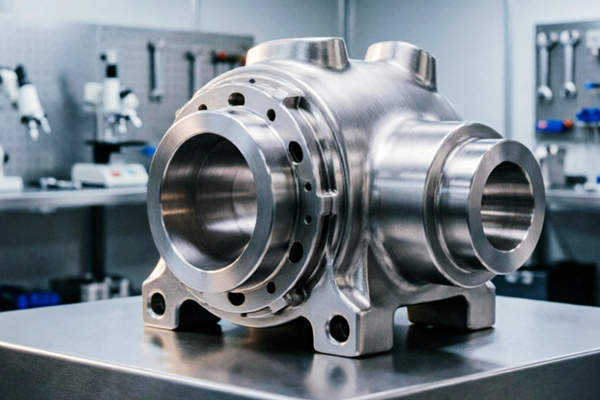
It is important to distinguish no MOQ from low quality or limited capability. Reputable no MOQ metal manufacturers maintain the same tolerances, material certifications, and surface finishes as their high-volume counterparts. The difference lies in their operational model: they have invested in flexible automation, digital quoting systems, and standardized workholding to make small jobs profitable. Sanwo Metal exemplifies this approach, offering a wide range of metals—aluminum 6061, stainless steel 304 and 316, titanium Ti-6Al-4V, brass, and copper alloys—so that customers can test with production-grade materials rather than substitutes. The company also emphasizes quality control at every step, ensuring that a single part receives the same inspection rigor as a thousand.
From a business perspective, no MOQ metal manufacturing lowers the barrier to entry for hardware startups and independent inventors. It also supports agile supply chains, where companies can order replacement parts on demand rather than holding expensive inventory. During the COVID-19 pandemic, for example, no MOQ manufacturers quickly produced small batches of metal ventilator components and custom fixtures, demonstrating their value in crisis response. Sanwo Metal's focus on this segment reflects a broader recognition that the future of metal manufacturing is not only about scale, but about responsiveness.
Challenges remain. No MOQ services typically come with higher per-part prices than mass production, and lead times can vary depending on shop capacity. Customers must also provide clean, manufacturable CAD files to avoid delays. Nevertheless, the trend is clear: as digital manufacturing matures, the concept of MOQ is fading for prototyping and low-volume production. Companies like Sanwo Metal are proving that small orders can be handled efficiently, professionally, and profitably.
In conclusion, no MOQ metal manufacturing is a cornerstone of modern rapid prototyping and custom metal processing. By removing the minimum order barrier, it empowers designers to iterate faster, reduce waste, and bring metal products to life with unprecedented agility. For anyone serious about metal innovation, the ability to order one part—and then one hundred—without penalty is not just convenient; it is transformative. Sanwo Metal's dedication to this model ensures that innovators can focus on what matters most: building better products, faster.


