

Low Volume Tooling: Enabling Efficient Production for Niche and Emerging Markets
In the modern manufacturing landscape, the pressure to innovate quickly while managing costs has given rise to a strategic approach known as low volume tooling. Unlike traditional mass production, where tooling costs are amortized over millions of units,low volume toolingfocuses on creating functional, durable molds, dies, and fixtures for production runs ranging from a few dozen to a few thousand parts. This approach is critical for startups, aerospace suppliers, medical device manufacturers, and automotive prototyping teams who need real parts without committing to the astronomical expenses of hard tooling.
What Constitutes Low Volume Tooling?
Low volume toolingencompasses a range of methods designed to bridge the gap between manual prototyping and full-scale production. Common examples include CNC-machined aluminum molds for plastic injection molding, urethane casting molds made from silicone, sheet metal forming dies produced via laser cutting or waterjet, and 3D-printed jigs and fixtures. The unifying principle is that the tooling is engineered to withstand a limited number of cycles—often 50 to 10,000—rather than the hundreds of thousands required in high-volume manufacturing.
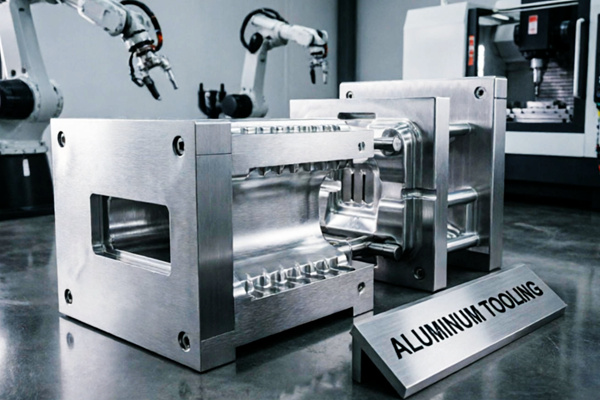
Materials play a pivotal role. Instead of hardened steel, low volume tooling frequently uses aluminum, beryllium copper, or even high-performance polymers. These materials are faster to machine, cost significantly less, and can still deliver acceptable surface finishes and dimensional tolerances for many applications. For example, an aluminum mold for injection molding might cost $3,000 to $8,000, compared to $50,000 or more for a hardened steel tool. This cost structure allows companies to iterate designs, test market demand, or produce legacy parts without risking capital on unproven products.
Why Low Volume Tooling Matters
The primary driver is economic risk mitigation. Launching a new product with uncertain demand is a gamble. If a company invests in high-volume steel tooling and the product fails, the loss is substantial. Low volume tooling lets businesses produce an initial batch, gather customer feedback, and refine the design before scaling. This is particularly vital in the medical field, where custom surgical instruments or patient-specific implants may only be needed in small quantities. Similarly, aerospace legacy components often require low volume production because the original aircraft may be decades old, and demand for spare parts is intermittent.
Another advantage is speed. Traditional tooling can take 12 to 20 weeks to design, manufacture, and validate. Low volume tooling, leveraging CNC machining and 3D printing, can be ready in as little as two to four weeks. This accelerated timeline supports agile development cycles, allowing engineers to test form, fit, and function rapidly. For bridge production—the period between prototype validation and full-scale manufacturing—low volume tooling ensures that market launch is not delayed by long lead times for steel molds.
Technical Considerations and Trade-offs
Low volume tooling is not without limitations. Tool life is finite. Aluminum molds wear faster, especially with abrasive plastics or glass-filled resins. Cooling times may be longer because aluminum conducts heat differently than steel, potentially increasing cycle times. Tolerances are often looser; achieving ±0.05 mm may be possible, but ±0.01 mm is challenging without additional machining. Surface finishes may show more texture or require post-processing.
Designers must also account for mold shrinkage, draft angles, and ejection systems, just as with hard tooling. However, the lower cost permits design changes between runs. If a modification is needed, modifying an aluminum mold is far cheaper and faster than reworking a steel one. This flexibility encourages iterative improvement, which is a hallmark of lean manufacturing.
Applications Across Industries
Consumer Products:Startups use low volume tooling for crowdfunding campaigns, producing 500 to 2,000 units to fulfill backer orders while refining the design for mass production.
Automotive:Race teams and custom car builders rely on low volume tooling for unique body panels, intake manifolds, and interior trim.
Medical Devices:Custom orthotics, surgical guides, and dental aligners are often produced using low volume tooling derived from patient scans.
Electronics:Enclosures and housings for specialized industrial equipment are frequently injection molded in aluminum tools for batches of a few thousand.
Best Practices for Success
To maximize the benefits of low volume tooling, engineers should collaborate closely with toolmakers early in the design phase. Choosing the right process—urethane casting versus aluminum injection molding versus CNC machining—depends on material properties, quantity, and tolerance requirements. Simulation software can predict flow and cooling in molds, reducing trial-and-error. Finally, maintaining a digital twin of the tool allows for predictive maintenance and quick adjustments.
Conclusion
Low volume toolingis not merely a compromise; it is a strategic enabler. It democratizes manufacturing by lowering barriers to entry, supports customization and personalization, and aligns production with actual demand. As supply chains become more resilient and consumers expect greater variety, the ability to produce efficiently at low volumes will only grow in importance. By understanding the materials, processes, and trade-offs, manufacturers can leverage low volume tooling to innovate faster, reduce waste, and bring products to market with confidence.


