

Custom Sheet Metal Parts: Engineering Precision from Flat Stock to Finished Component
Custom sheet metal parts are the unsung workhorses of modern manufacturing. From the chassis of an electric vehicle and the enclosures protecting sensitive medical electronics to the brackets that hold a satellite together, these components are everywhere. Yet despite their ubiquity, the process of turning a flat sheet of metal into a precise, functional part is far more sophisticated than it appears. Understanding what custom sheet metal fabrication involves—and what separates a good supplier from a great one—is essential for engineers, product managers, and procurement teams alike.
At its core, custom sheet metal fabrication is a subtractive and formative process: material is cut, shaped, and joined according to a customer's exact specifications. Unlike off-the-shelf hardware, custom parts are designed to solve a specific problem, which means the fabrication workflow must adapt to tolerances, material properties, surface finishes, and production volumes that vary from project to project.
The Core Processes
Most custom sheet metal work begins with cutting. Laser cutting remains the dominant method for its speed, accuracy, and ability to handle complex geometries in materials ranging from mild steel to aluminum, stainless steel, and copper. For thicker gauges or high-volume runs, plasma cutting offers a cost-effective alternative, while waterjet cutting excels when heat-affected zones must be avoided—particularly useful for aerospace alloys and heat-sensitive materials.
Once cut, parts move to forming. Press brakes bend flat blanks into three-dimensional shapes using precision-ground tooling. The challenge here is not simply achieving the bend angle but accounting for springback, bend radius, and the material's grain direction. A skilled programmer calculates the bend allowance and deduction so that the final part matches the CAD model within fractions of a millimeter. For more complex geometries, processes like roll forming, deep drawing, or hydroforming may be required.
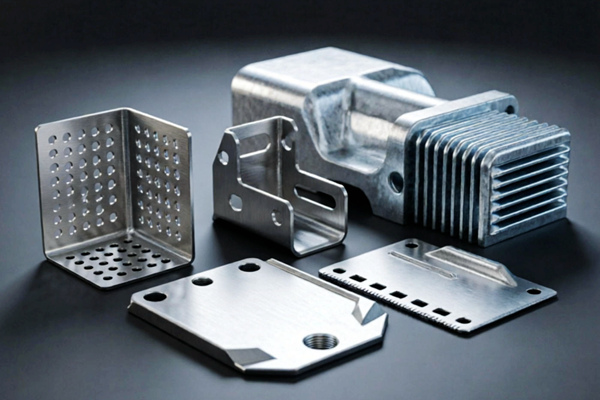
Joining follows. Welding—TIG, MIG, spot, or laser—is the most common method, but riveting, clinching, and adhesive bonding are also used depending on the application's structural and aesthetic requirements. Finally, finishing operations such as deburring, powder coating, anodizing, plating, or silk-screen printing give the part its final appearance and corrosion resistance.
Design for Manufacturability
The success of any custom sheet metal project is largely determined before the first cut is made. Design for manufacturability (DFM) principles guide engineers to avoid common pitfalls: sharp internal corners that crack during bending, holes placed too close to bend lines, or tolerances tighter than the process can reliably hold. A good fabrication partner reviews drawings early, flags potential issues, and suggests cost-saving alternatives—such as consolidating parts, standardizing material thicknesses, or relaxing unnecessary tolerances.
Material selection is equally critical. Aluminum offers an excellent strength-to-weight ratio and natural corrosion resistance, making it ideal for enclosures and aerospace brackets. Stainless steel provides superior durability and hygiene, which is why it dominates food-processing and medical equipment. Cold-rolled steel is economical and takes paint well, while copper and brass are chosen for electrical conductivity and aesthetic appeal.
Why Custom Matters
The alternative to custom fabrication—modifying standard parts or over-designing with excess material—often leads to compromised performance and higher total costs. A custom bracket that fits perfectly eliminates assembly errors, reduces fasteners, and shortens installation time. A custom enclosure can integrate mounting points, ventilation, and cable management in a single piece, reducing part count and simplifying inventory. In industries such as medical devices, aerospace, and renewable energy, custom sheet metal parts are not a convenience but a necessity, because no standard product can meet the combined demands of geometry, weight, and regulatory compliance.
Choosing the Right Partner
Not all fabricators are equal. The best partners combine advanced equipment—fiber lasers, CNC press brakes, automated welding cells—with experienced engineers who can translate a concept into a production-ready design. They offer rapid prototyping, transparent quoting, and consistent quality documentation. They also understand that communication matters as much as machinery: clear feedback on lead times, material availability, and design trade-offs prevents costly delays.
Conclusion
Custom sheet metal parts sit at the intersection of design intent and manufacturing reality. They demand precision in cutting, forming, and joining, and they reward thoughtful collaboration between designer and fabricator. As products become lighter, stronger, and more complex, the ability to produce reliable custom sheet metal components will remain a cornerstone of competitive manufacturing. Whether the project is a single prototype or a million-unit production run, success comes down to one principle: the right process, applied with the right expertise, to the right specification.


