

Rapid Prototyping and Custom Fabrication of Aerospace Metal Parts
The aerospace industry has always operated at the frontier of what is technically possible. Every kilogram saved, every tolerance tightened, and every lead time shortened translates directly into competitive advantage, fuel efficiency, and mission success. At the heart of this pursuit lies a category of components that demands nothing less than perfection: aerospace metal parts. Historically, producing these parts—especially in prototype quantities—was a slow, expensive, and rigid process. Today, however, the rise of rapid prototyping and custom fabrication is fundamentally reshaping how aerospace metal components move from concept to flight.
The Unique Demands of Aerospace Metal Components
Aerospace metal parts are not ordinary hardware. They operate under extremes of temperature, pressure, vibration, and mechanical stress. A single bracket, housing, or turbine blade may be subject to certification standards such as AS9100, NADCAP, or FAA requirements. Materials are typically high-performance alloys: titanium (Ti-6Al-4V), Inconel, aluminum 7075, 17-4 PH stainless steel, and various nickel-based superalloys. These materials are chosen for their strength-to-weight ratios, corrosion resistance, and thermal stability—but they are notoriously difficult to machine, cast, or weld.
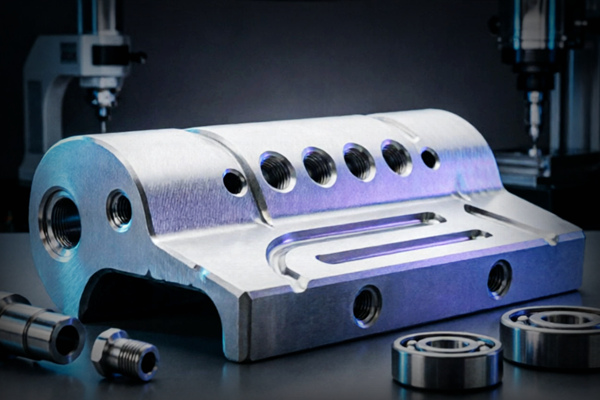
In the past, a design engineer who needed a custom prototype bracket or a small batch of actuator housings faced a stark choice. Conventional CNC machining was possible but often required dedicated fixtures, long setup times, and significant material waste. Casting or forging required tooling investments that only made sense at high volumes. As a result, prototyping cycles stretched from weeks to months, and design iterations were limited by cost and schedule.
How Rapid Prototyping Changes the Equation
Rapid prototyping, in the context of aerospace metal parts, refers to a set of digital-driven manufacturing processes that produce functional metal components directly from CAD data with minimal tooling. The most prominent among these are:
Direct Metal Laser Sintering (DMLS) and Selective Laser Melting (SLM):These powder-bed fusion technologies build parts layer by layer from metal powders, achieving densities above 99% and mechanical properties comparable to wrought materials.
Electron Beam Melting (EBM):Particularly suited for titanium and cobalt-chrome alloys, EBM offers faster build rates and reduced residual stress.
Binder Jetting:A faster, lower-cost alternative for certain alloys, followed by sintering.
Hybrid Manufacturing:Combining additive and subtractive processes in a single machine to achieve fine surface finishes and tight tolerances on complex geometries.
These technologies allow engineers to produce fully functional metal prototypes—not just visual models—within days. More importantly, they enable design freedom that traditional methods cannot match. Internal cooling channels, lattice structures, topology-optimized shapes, and consolidated multi-part assemblies are all achievable without additional tooling cost.
Custom Prototype Machining: The Complementary Role
While additive manufacturing captures much of the attention, custom prototype machining remains indispensable. Many aerospace metal parts still require the material properties, surface finish, and dimensional precision that only CNC turning and milling can deliver. The modern rapid prototyping ecosystem is therefore hybrid: additive for complexity and speed, subtractive for precision and material integrity.
Advanced CNC shops now integrate five-axis machining, high-speed spindles, and in-process inspection to produce custom prototypes from titanium and Inconel with tolerances of ±0.005 mm or better. When combined with additive preforms, hybrid workflows reduce lead times by 40–60% compared to conventional routes.
The Business and Engineering Impact
The shift toward rapid prototyping and custom fabrication delivers measurable benefits:
1. Accelerated Design Iteration:Engineers can test three or four design variants in the time previously required for one. This accelerates convergence on optimal designs.
2. Reduced Tooling Investment:No hard tooling is needed for prototypes or low-volume production, lowering the barrier to entry for new programs.
3. Lightweighting and Part Consolidation:Additive processes enable organic geometries and assembly consolidation, directly reducing weight—a critical metric in aerospace.
4. Supply Chain Resilience:On-demand digital manufacturing reduces dependence on long-lead castings and forgings, which is invaluable for legacy aircraft and urgent repairs.
5. Certification Pathways:Although qualification remains rigorous, standards bodies are increasingly publishing frameworks for additively manufactured aerospace parts, easing adoption.
Challenges and Considerations
Rapid prototyping of aerospace metal parts is not without hurdles. Surface finish from powder-bed fusion often requires post-processing. Residual stresses may necessitate heat treatment. Material certification and traceability demand robust quality systems. And the cost of metal powders and advanced machines remains high. Nevertheless, these challenges are being addressed through improved process monitoring, standardized feedstock, and hybrid post-processing.
Conclusion
The convergence of rapid prototyping and custom fabrication is redefining how aerospace metal parts are designed, validated, and produced. What was once a linear, tooling-dependent process has become an iterative, digital-first workflow. For engineers and manufacturers, the message is clear: the ability to rapidly prototype and custom-fabricate high-performance metal components is no longer a niche capability—it is a strategic imperative. In an industry where speed, weight, and reliability determine success, rapid prototyping is not just a convenience. It is the new standard for aerospace metal parts.


