
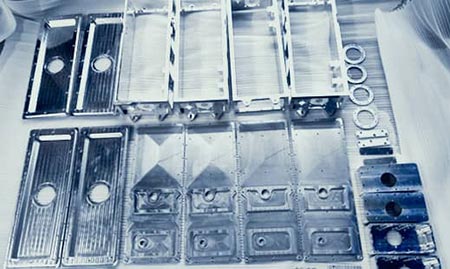
Precision and Innovation in CNC Machining Prototyping
CNC Machining Prototyping has revolutionized the product development process by providing manufacturers and designers with the ability to create highly accurate and functional prototypes quickly. This process enables the transformation of digital designs into physical components with exceptional precision, helping businesses test concepts, validate designs, and accelerate time-to-market. CNC prototyping is widely used across industries including automotive, aerospace, electronics, and consumer products, where accuracy, functionality, and speed are critical.
Understanding CNC Machining Prototyping
CNC (Computer Numerical Control) machining prototyping is a manufacturing process in which computer-controlled machines remove material from a workpiece to create a desired shape. The process begins with a 3D CAD model, which is converted into instructions for the CNC machine. These machines, which include milling, turning, and grinding equipment, follow precise coordinates to cut, drill, and shape materials such as metals, plastics, and composites. CNC prototyping allows for the production of complex geometries, tight tolerances, and intricate details that are difficult to achieve with traditional manual methods.
Materials Used in CNC Prototyping
CNC machining prototyping supports a wide range of materials depending on the application and performance requirements. Metals such as aluminum, stainless steel, titanium, and brass are commonly used for their strength and durability. Plastics like ABS, polycarbonate, and nylon are chosen for lightweight and cost-effective prototypes. Composite materials can also be machined to simulate the properties of final production components. Material selection plays a crucial role in achieving accurate functional testing, aesthetic evaluation, and durability analysis during the prototyping phase.
Applications Across Industries
CNC machining prototyping is widely utilized in diverse industries for product development and testing. In the automotive sector, it is used to produce prototype components such as engine parts, brackets, and housings, enabling engineers to evaluate fit, performance, and functionality before mass production. Aerospace companies rely on CNC prototyping for high-precision parts that meet strict safety and regulatory requirements. Consumer electronics manufacturers use the process to create enclosures, connectors, and intricate internal components, ensuring design feasibility and performance. Medical device companies benefit from CNC prototyping to develop surgical instruments, implants, and diagnostic tools with precise specifications.
Advantages of CNC Machining Prototyping
CNC machining prototyping provides several advantages that make it essential in modern product development. The process allows for rapid production of accurate prototypes that closely replicate final production parts. This enables designers and engineers to test form, fit, and function before committing to large-scale manufacturing. CNC prototyping also accommodates design modifications easily, allowing iterative improvements without significant delays. High precision and repeatability ensure consistent results, reducing the risk of errors during the transition to mass production.
Process and Technology
The CNC prototyping process begins with creating a detailed CAD model, followed by programming the CNC machine using CAM (Computer-Aided Manufacturing) software. The machine then removes material from the workpiece according to programmed instructions. Advanced CNC machines can perform multiple operations in a single setup, improving efficiency and reducing production time. Post-processing, such as deburring, polishing, or surface finishing, ensures the prototype meets the desired aesthetic and functional standards.
Conclusion
CNC machining prototyping is a critical tool in modern manufacturing, providing high-precision, functional, and reliable prototypes for product development. Its ability to work with various materials and achieve complex geometries allows businesses to test, refine, and validate designs efficiently. With applications spanning automotive, aerospace, electronics, and medical industries, CNC prototyping accelerates innovation and reduces the risk associated with product development. By leveraging this technology, manufacturers and designers can bring high-quality, well-tested products to market with confidence.


