

Practical Principles for Sheet Metal Housing Shells
A sheet metal housing shell is a structural enclosure formed from thin-gauge metal sheet through processes such as blanking, bending, punching, and joining. It serves as the protective and aesthetic outer skin of countless products—from industrial control cabinets and medical devices to telecommunications equipment and consumer appliances. While often treated as a secondary concern behind internal electronics or mechanics, the housing shell plays a decisive role in product safety, electromagnetic compatibility, thermal performance, and perceived quality. This article examines the key design, material, manufacturing, and finishing considerations that define a well-engineered sheet metal housing shell, and surveys how requirements diverge across industries.
Functional Requirements Driving Shell Design
Before a single bend line is drawn, the function of the shell must be defined. A housing shell typically fulfills several roles simultaneously. It provides mechanical protection against impact, dust, and moisture; it shields internal components from electromagnetic interference (EMI) or contains emissions; it contributes to thermal management through conduction and convection; it offers mounting interfaces for PCBs, connectors, and labels; and it establishes the product's visual identity.
Each requirement translates into design parameters. Ingress protection targets, such as IP54 or IP65, dictate seam design, gasket grooves, and fastener selection. EMI requirements influence material choice, seam overlap, and grounding points. Thermal loads determine vent placement and the use of heat-spreading surfaces. Early alignment between electrical, mechanical, and industrial design teams prevents costly redesigns later in the program.
Material Selection
Cold-rolled steel, galvanized steel, stainless steel, aluminum, and copper alloys are the most common sheet materials for housing shells. Cold-rolled steel offers an excellent balance of strength, formability, and cost, and it accepts powder coating readily. Galvanized steel provides corrosion resistance without painting, making it suitable for internal brackets and cost-sensitive enclosures. Stainless steel is chosen for hygienic, outdoor, or chemically aggressive environments, though its higher strength demands more tooling wear and bending force.
Aluminum, particularly 5052 and 6061 grades, is favored where weight reduction, corrosion resistance, and thermal conductivity matter. Its lower density suits portable and rack-mounted equipment, and anodizing provides a durable decorative finish. Material thickness typically ranges from 0.5 mm for small consumer enclosures to 3 mm or more for large industrial cabinets. Thickness selection must balance stiffness, weight, cost, and bendability—tight bend radii relative to thickness can cause cracking, particularly in harder alloys.
Design for Manufacturability
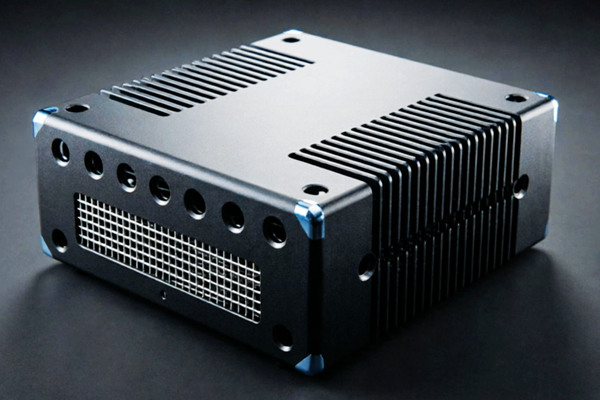
Design for manufacturability principles are central to sheet metal housing shells. Bend reliefs and corner reliefs prevent tearing at bend intersections. Hole-to-bend distances should respect minimum values to avoid deformation. Consistent bend directions and generous radii reduce tooling complexity. Self-clinching fasteners, rivet nuts, and tapped holes should be specified with standard hardware to simplify assembly.
Modern shells frequently use a flat-pattern-first approach: the entire part is modeled in 3D, unfolded into a flat blank, and checked for collisions and tolerance stack-ups before tooling is cut. Progressive dies suit high-volume production, while laser cutting plus press braking remains the standard for low-to-medium volumes and large enclosures. Joining methods include spot welding, riveting, clinching, and, increasingly, adhesive bonding for appearance-critical seams.
Finishing and Assembly
Finishing determines both durability and customer perception. Powder coating is the dominant process for steel shells, offering thick, uniform films and a wide color range. Pretreatment—degreasing, phosphating, or conversion coating—is essential for adhesion and corrosion performance. Aluminum shells are commonly anodized or painted after chromate conversion coating. Silk-screen printing and laser marking provide durable labeling.
Assembly considerations include fastener accessibility, cable routing, serviceability, and grounding continuity. Conductive gaskets, finger stock, and dedicated grounding studs ensure EMI performance across painted interfaces. Designers should also account for tolerance accumulation across multiple bent parts, specifying adjustable mounting slots where stack-ups are unavoidable.
Industry-Specific Application Perspectives
The same sheet metal principles produce markedly different shells across sectors, because each industry imposes its own regulatory, environmental, and operational constraints.
Industrial automation and control.Enclosures for PLCs, drives, and machine controls prioritize rigidity, vibration resistance, and IP ratings. Large cabinets use heavier gauge steel, reinforced frames, and modular sub-panels. Accessibility for wiring and maintenance—hinged doors, removable gland plates, and standardized cutouts—matters as much as protection. Thermal design often relies on filtered fans or heat exchangers rather than vents alone.
Medical and laboratory equipment.Here the shell must withstand frequent cleaning with aggressive disinfectants, so stainless steel or specially coated aluminum dominates. Seams are minimized to prevent pathogen traps, and surfaces are designed for wipe-down. Aesthetic refinement is high, since equipment sits in clinical spaces, and EMI shielding is critical for imaging and diagnostic devices.
Telecommunications and data centers.Rack-mount and outdoor telecom enclosures demand precise dimensional tolerances for 19-inch or ETSI rack compatibility, robust EMI performance, and often weatherproofing for pole- or wall-mounted units. Aluminum is common for weight and thermal reasons, and designs must accommodate high port density with clean cable management.
Consumer electronics and appliances.At the opposite extreme, thin-gauge aluminum and steel shells emphasize appearance, touch feel, and cost. Anodized aluminum unibody-style enclosures, precision laser-cut vents, and hidden fasteners define premium products. Tolerances are tight, cosmetic defects are unacceptable, and finishing quality directly drives brand perception.
Automotive and electric mobility.Battery packs, chargers, and power electronics housings require crashworthiness, sealing against road spray, and EMI containment. High-strength steels and aluminum extrusions are combined with sheet metal covers, and designs must satisfy automotive qualification standards for vibration, thermal cycling, and corrosion.
Energy and outdoor infrastructure.Solar inverters, EV charging posts, and power distribution cabinets face UV exposure, temperature extremes, and vandalism. Galvanized or stainless construction, robust locks, and drainage-aware geometry are standard, with corrosion testing aligned to coastal or desert conditions.
These examples show that no single "best" shell design exists. The material grade, gauge, seam strategy, finish, and tolerance regime must be derived from the operating environment and the governing standards of the target industry.
Conclusion
The sheet metal housing shell is a deceptively simple component that integrates mechanical protection, environmental sealing, electromagnetic performance, thermal management, and brand identity. Successful designs emerge from early cross-functional requirements definition, disciplined material and thickness selection, adherence to manufacturability rules, and careful finishing and assembly planning. Because requirements vary sharply by industry—from hygienic wipe-down surfaces in medical devices to crash-resistant battery enclosures in mobility—designers must treat the shell as an industry-specific engineering problem rather than a generic box. As products grow denser, lighter, and more connected, the housing shell will continue to evolve—incorporating thinner high-strength materials, hybrid metal-plastic constructions, and integrated shielding—but its foundation remains the same: thoughtful engineering at the intersection of form, function, and fabrication.


