

How Sanwo Metal Masters the Art of Aluminum Tooling
In the relentless pursuit of manufacturing efficiency, few materials have redefined production economics quite like aluminum. For decades, tooling—the very backbone of molding, stamping, and casting—was dominated by steel’s brute strength. However, as industries pivot toward lightweighting, thermal agility, and rapid iteration, aluminum has emerged not as a compromise, but as a strategic advantage. Yet, to unlock this potential requires more than a CNC machine and a block of alloy; it demands a mastery of metallurgical behavior, thermal dynamics, and micron-level precision. This is where Sanwo Metal distinguishes itself, transforming aluminum tooling from a mere manufacturing step into a high-stakes engineering discipline.
The Material Edge: Why Aluminum Demands a Different Mindset
Aluminum tooling is not steel tooling scaled down; it is a fundamentally different ecosystem. With a thermal conductivity roughly five times that of steel, aluminum dissipates heat at a velocity that can either be a toolmaker’s greatest asset or their most destabilizing foe. In injection molding, this rapid heat transfer cuts cycle times by 30–50%, but it also introduces anisotropic expansion—where the tool grows and contracts unequally across its geometry. Without rigorous thermal mapping, this leads to warpage, sink marks, and dimensional drift that renders thousands of parts scrap.
Furthermore, aluminum’s lower hardness (typically 100–150 HB vs. steel’s 300+ HB) demands a radical rethinking of gating, venting, and support structures. It is a material that rewards intelligence but punishes bravado. Sanwo Metal’s approach begins not at the machining center, but at the simulation desk, where finite element analysis (FEA) predicts deflection under clamp pressure and coolant flow patterns before the first chip is ever cut.
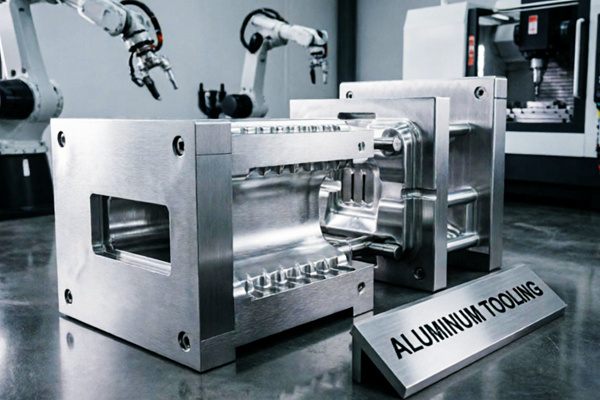
Sanwo Metal’s Technical Proficiency: From Billet to Benchmark
At the heart of Sanwo Metal’s reputation lies a vertically integrated workflow that bridges design, metallurgy, and precision machining. Their technical prowess is not a single capability but a layered symphony of processes:
Alloy Intelligence and Pre-Processing:
Sanwo Metal does not treat aluminum as a generic commodity. They select specific tempers—commonly 7075-T6 for high-wear cores and 6061-T6 for structural frames—based on the application’s stress profile. But selection is only the prelude. The company employs a proprietary stress-relief protocol involving sub-zero stabilization and controlled thermal cycling. This pre-machining treatment forces the grain structure to settle, reducing the internal residual stresses that cause“spring-back”or distortion when 50% of the billet is milled away. This step alone reduces post-machining deformation by over 60%, ensuring that a tool designed at 20°C remains dimensionally faithful at 200°C operating temperature.
High-Speed Milling and Dynamic Toolpaths:
Conventional steel machining relies on heavy cuts and low feed rates. Aluminum, conversely, thrives on high spindle speeds and light radial engagement. Sanwo Metal’s machining centers are equipped with 30,000 RPM spindles and proprietary adaptive clearing algorithms. Rather than linear passes, their toolpaths employ trochoidal milling—a cycloidal movement that maintains a constant chip load, preventing the tool from dwelling in corners where heat can accumulate. This strategy not only extends tool life by 40% but also achieves surface finishes of Ra 0.4 µm directly off the machine, often eliminating the need for secondary EDM or polishing on non-critical faces.
Cryogenic and MQL Cooling Integration:
Here lies one of Sanwo Metal’s most distinctive technical signatures: the hybrid use of Minimum Quantity Lubrication (MQL) augmented with through-spindle liquid CO₂cooling. While many shops flood the cutting zone with water-soluble coolants, Sanwo Metal recognized that thermal shock—the rapid quenching of the cutting edge—can induce micro-cracks in aluminum’s grain boundaries. By using CO₂as a gaseous coolant that expands and absorbs heat without liquid contact, they maintain the tool’s thermodynamic stability. Simultaneously, MQL delivers precise oil mist to the rake face, ensuring lubrication without the mess or disposal costs of traditional flood systems. The result is a tool that experiences consistent thermal expansion throughout a 10-hour run, holding positional tolerances of±0.005 mm.
In-Process Metrology and Adaptive Compensation:
Machining is not a set-it-and-forget-it operation at Sanwo Metal. Every major tooling project integrates in-machine probing sequences that recalibrate the workpiece at predetermined intervals. If a thermal drift of 2 microns is detected on a critical core pin, the CNC control autonomously applies a compensation offset to the subsequent passes. This closed-loop feedback transforms the machining center into a self-correcting system, ensuring that the final tool mirrors the CAD model with a fidelity that conventional offline inspection cannot guarantee.
The Professionalism Beyond the Machine
Technical capability, however, is only half the equation. Sanwo Metal’s professionalism manifests in its project management architecture—a structured, documentation-heavy approach that leaves nothing to ambiguity. For every aluminum tooling project, the company issues a comprehensive“Thermal Response Protocol”(TRP) that maps expected expansion coefficients at each zone of the tool. This document, shared with the client’s molding or casting team, aligns expectation with reality: the tooling is designed not for the drawing board, but for the specific machine, clamp tonnage, and cycle time of the client’s production floor.
Moreover, Sanwo Metal maintains an in-house coating facility for hard anodizing (Type III) and PTFE-impregnated coatings. This is not outsourced, ensuring that the coating thickness (typically 25–50 µm) is factored into the final machining allowance. Their technicians understand that anodizing grows the part’s dimensions; thus, they pre-machine under-size by the exact coating thickness, achieving a final fit that requires no hand-filing or shimming—a common plague in lesser toolrooms.
Case in Point: The High-Cavitation Challenge
Consider a recent project for a medical device manufacturer requiring a 16-cavity aluminum mold for a syringe component. The tolerances were severe: a shut-off angle of 0.5°with a parting line mismatch not exceeding 0.01 mm. Sanwo Metal’s response was methodical. They first conducted a mold-flow simulation to identify the hottest zones near the gate. Those zones were deliberately over-machined by 0.015 mm to compensate for the expected thermal dome—a phenomenon where the center of the tool expands more than the edges. During trial runs, the mold produced first-shot parts that were 98% within spec, requiring only a single polish adjustment. The cycle time? 8.2 seconds, compared to the steel baseline of 14 seconds—a productivity gain that paid for the tooling investment in under three months.
A Culture of Continuous Calibration
What ultimately sets Sanwo Metal apart is the culture that underpins these techniques. Their machinists undergo quarterly certification on thermal management theory; their quality engineers are trained not just on CMM operation but on interpreting thermal growth patterns. It is a company where the maintenance logs for spindle chillers are reviewed with the same rigor as the part inspection reports.
In an era where“aluminum tooling”is often marketed as a cheap alternative, Sanwo Metal positions it as a precision upgrade—but only when executed with the discipline that the material demands. Their expertise lies not in making aluminum behave like steel, but in listening to what aluminum inherently does and designing the process around that behavior.
Conclusion: The Aluminum Imperative
As manufacturing edges toward electrification and lightweight structures, aluminum tooling will become less of an option and more of a necessity. Yet, the gap between a tool that works and a tool that excels is measured in microns, thermal degrees, and the depth of the team’s technical reservoir. Sanwo Metal has bridged that gap through a combination of advanced cryogenic machining, dynamic toolpathing, and a professional ethos that treats every tool as a scientific instrument.
For clients seeking not just a supplier, but a partner who can guarantee throughput, repeatability, and dimensional integrity from the first shot to the millionth, Sanwo Metal’s aluminum tooling practice stands as a benchmark. It is a testament to the fact that in the world of high-precision manufacturing, mastery is not about the metal itself—it is about the knowledge that commands it.


