

Custom Metal Sheet Components: Engineering Precision in a Flexible World
In an era dominated by digital disruption and advanced composites, the humble sheet of metal remains an irreplaceable pillar of modern manufacturing. However, the industry has long moved beyond the era of standardized, off-the-shelf brackets and enclosures. Today, the demand is for custom metal sheet components—precision-engineered solutions tailored to the exact geometric, structural, and aesthetic requirements of specific applications. From the sleek chassis of a medical MRI machine to the heat-resistant shielding of an aerospace turbine, these components represent the convergence of material science, computational design, and mechanical craftsmanship.
The Necessity of Customization
The shift toward customization is driven by the relentless pursuit of optimization. In industries like automotive and electronics, space is a premium; a component must fit within millimeter tolerances while performing multiple functions—structurally supporting loads, dissipating heat, and shielding electromagnetic interference. Standard parts simply cannot meet these converging demands. Custom metal sheet fabrication allows engineers to eliminate unnecessary bulk, reducing overall system weight, which is critical for electric vehicles striving for extended range and for aerospace applications where every gram affects fuel efficiency.
Furthermore, customization enables functional integration. Rather than assembling a structure from several welded or bolted pieces, a single custom sheet component can be formed with integrated ribs, bosses, and mounting flanges. This part consolidation reduces assembly time, lowers inventory costs, and minimizes potential points of failure, enhancing the overall reliability of the final product.
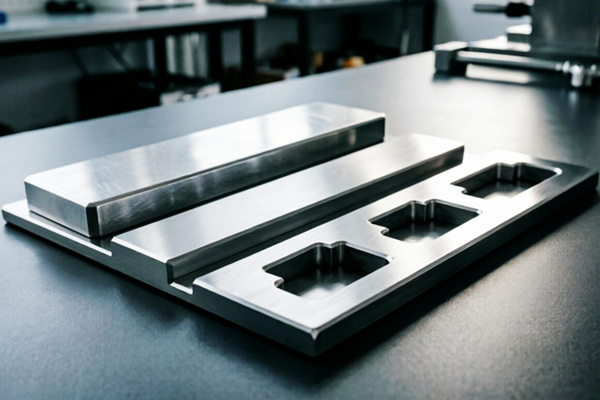
The Technological Trinity: Design, Simulation, and Fabrication
The journey of a custom sheet metal component begins not on the factory floor, but in the digital realm of CAD (Computer-Aided Design) and FEA (Finite Element Analysis). Advanced software allows engineers to model the final assembly, simulating stress, vibration, and thermal loads before a single sheet is cut. This virtual prototyping is essential; it identifies weak points or areas of excessive deflection that would lead to fatigue in the field.
Once the design is finalized, the fabrication process leverages a sophisticated suite of machinery. High-power fiber lasers and precision turret punches are used for blanking and cutting, offering unparalleled speed and accuracy—often with tolerances of±0.1mm. These machines are paired with advanced nesting algorithms that optimize material usage, arranging numerous different components within a single sheet to minimize scrap, thereby reducing costs and supporting sustainability goals.
Following cutting, the components undergo forming operations. CNC press brakes, equipped with multi-axis back gauges and specialized tooling, bend the flat blanks into complex three-dimensional shapes. The real challenge lies in managing "springback"—the natural tendency of metal to return to its original shape after bending. Advanced press brakes compensate by over-bending, guided by real-time angle measurement systems that ensure the final geometry matches the CAD model precisely.
Material Selection and Surface Engineering
The customization extends deeply into material choice. While mild steel is suitable for general applications, high-strength low-alloy (HSLA) steels are chosen for heavy-duty frames. For electronics, the excellent thermal conductivity of aluminum or the EMI-shielding properties of galvanized steel are prioritized. In corrosive environments like marine or chemical processing, stainless steel grades like 304 or 316 are indispensable.
Equally critical is the surface finish. Raw metal is often insufficient; secondary operations like powder coating, anodizing, or e-coating are applied to provide corrosion resistance, improve aesthetics, or alter electrical conductivity. These finishes are part of the custom specification, ensuring the component performs optimally in its specific operational environment.
Challenges and Future Trajectories
Despite the technological progress, challenges remain. The cost of high-quality custom tooling and the skilled labor required to operate advanced machinery represent significant barriers. Additionally, maintaining tight tolerances across large production runs demands rigorous quality control, often utilizing coordinate measuring machines (CMMs).
Looking ahead, the field is being transformed by automation and data integration. Smart factories are emerging where machines communicate via the Industrial Internet of Things (IIoT), adjusting parameters in real-time to compensate for material variations. Additive manufacturing (3D printing) is also beginning to complement subtractive metal fabrication, allowing for the creation of organic, lattice-like structures that are impossible to form through traditional bending or stamping.
In conclusion, custom metal sheet components are far more than simple pieces of material; they are the embodiment of modern engineering ingenuity. They represent a flexible, resilient solution to the complex physical demands of contemporary technology. As materials evolve and digital tools become more powerful, the ability to customize these components will only grow, reinforcing their vital role in building the machines, vehicles, and infrastructure of the future. The future of manufacturing is not standardized—it is profoundly, beautifully custom.


