

Advanced Manufacturing Processes for Custom Design Aluminium Parts
In modern manufacturing, the demand for components that are lightweight, durable, and highly precise continues to grow across industries such as aerospace, automotive, electronics, and renewable energy. Custom design aluminium parts have emerged as a strategic solution, combining material science, engineering creativity, and advanced manufacturing technology. This article explores the key dimensions of custom aluminium part design, from material advantages to manufacturing processes and strategic benefits.
The Material Advantage of Aluminium
Aluminium's popularity in custom component design stems from a distinctive set of physical properties. Its exceptional strength-to-weight ratio makes it invaluable in applications where reducing mass directly improves performance—whether enhancing fuel efficiency in vehicles, extending battery life in portable electronics, or improving payload capacity in aircraft. Beyond lightness, aluminium offers excellent corrosion resistance due to the protective oxide layer that naturally forms on its surface, making custom parts suitable for marine, architectural, and outdoor applications. The metal also conducts heat and electricity efficiently, which is essential for custom heat sinks, thermal management systems in electric vehicles, and electronic enclosures. Its non-magnetic nature suits sensitive medical and electronic equipment, while its high recyclability supports sustainability goals and regulatory compliance. These combined properties make aluminium an ideal foundation for bespoke engineering solutions.
The Role of Custom Design in Optimizing Performance
Off-the-shelf components often force engineers to accept compromises in fit, function, or weight. Custom design eliminates these limitations by tailoring each part to specific application requirements. The process typically begins with a thorough analysis of functional needs, environmental conditions, and spatial constraints. Using Computer-Aided Design and Finite Element Analysis, engineers can simulate stress, thermal behavior, and structural integrity before production begins. This digital-first approach enables topology optimization—creating organic, material-efficient geometries that are stronger and lighter than conventional designs. Custom design also allows for part consolidation, where multiple components are integrated into a single piece, reducing assembly complexity and failure points. The result is a component that performs optimally in its intended environment rather than merely adequately.
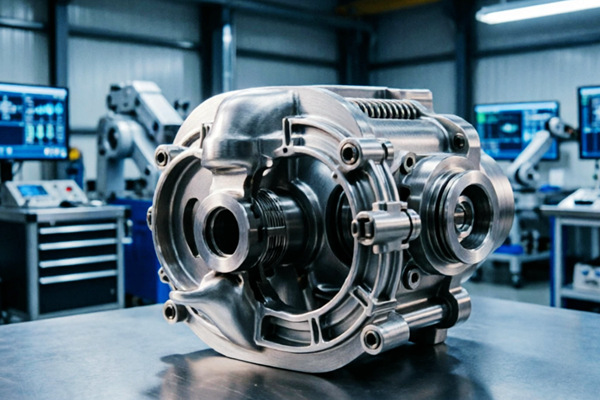
Advanced Manufacturing Processes for Custom Aluminium Parts
Executing sophisticated designs requires selecting the right manufacturing method for each application. CNC machining remains the preferred choice for high-precision, complex parts, offering tight tolerances and excellent surface finishes from solid aluminium stock. Aluminium extrusion is highly cost-effective for producing long, uniform profiles with thin walls at high volumes, making it popular in construction and automotive applications. Die-casting enables mass production of detailed components with integrated features, ideal when complexity and volume are both high. Additive manufacturing, or industrial 3D printing, has expanded possibilities by allowing the creation of intricate, topology-optimized geometries that traditional methods cannot achieve, while also accelerating prototyping and small-batch production. Each process offers distinct advantages, and experienced manufacturers often combine several to balance cost, quality, and lead time.
Strategic Benefits for Product Development
Adopting a custom design approach for aluminium parts delivers benefits that extend well beyond the component itself. Strategically, it fosters innovation by freeing engineers from catalog constraints and enabling designs tailored to exact performance targets. Operationally, it improves efficiency through part consolidation, simplified assembly, and reduced inventory. Commercially, it supports product differentiation in competitive markets where performance and reliability are decisive. Environmentally, custom aluminium parts contribute to lighter products with lower energy consumption and align with circular economy principles through recyclability. In an era of continuous improvement and rapid technological change, the ability to specify and manufacture bespoke aluminium components is a foundational element of successful product development.
Conclusion
Custom design aluminium parts represent the intersection of material excellence, engineering precision, and manufacturing versatility. From material selection to digital optimization and advanced fabrication, each stage of the custom design process contributes to components that are lighter, stronger, more efficient, and more sustainable than standard alternatives. As industries continue to pursue higher performance and lower environmental impact, custom aluminium part design will remain a key enabler of innovation—driving progress in products ranging from wearable devices to advanced aircraft, one precisely engineered component at a time.


